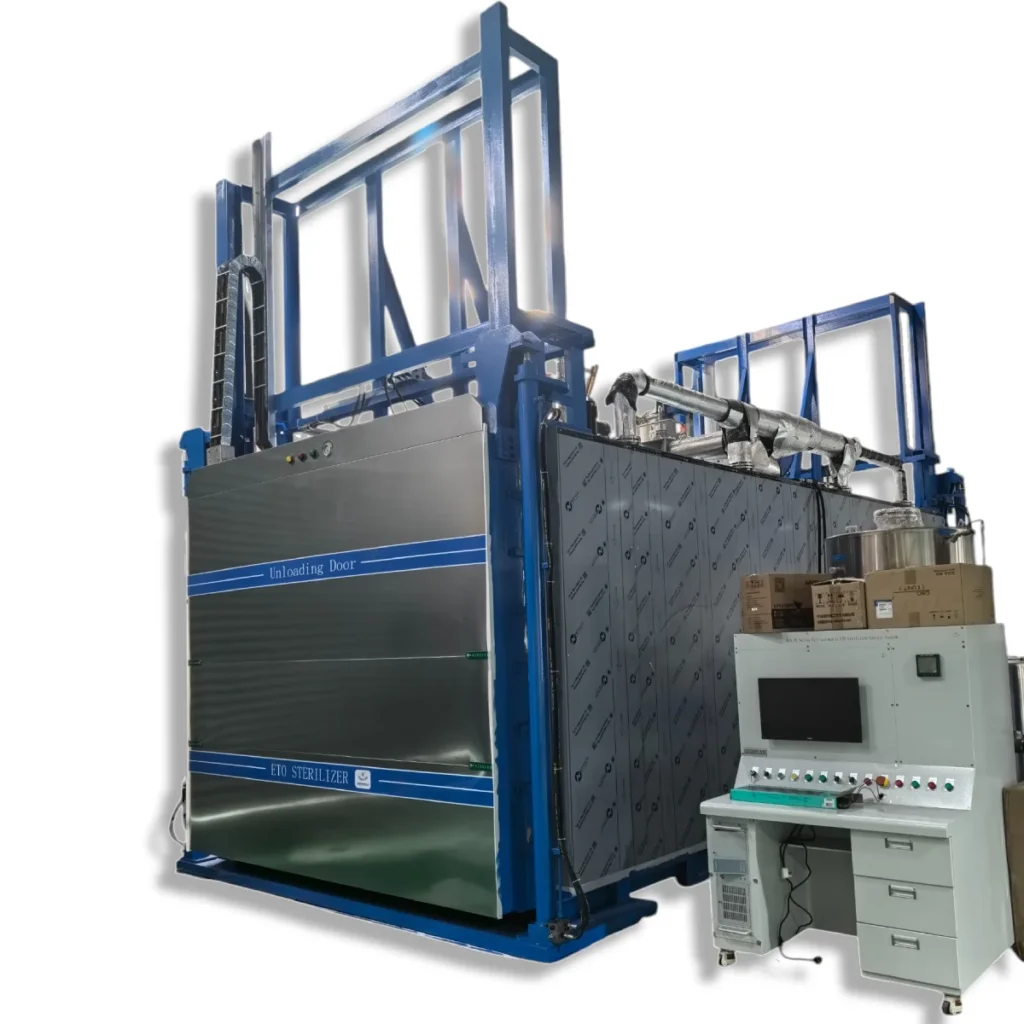
Ethylene oxide (ETO STERILIZATION) is widely used as a low-temperature sterilant in industries like healthcare, pharmaceuticals, and biotechnology. However, due to its toxic, flammable, and potentially carcinogenic properties, it’s critical to follow strict safety protocols. This article outlines the essential safety guidelines for safely operating ETO STERILIZATION systems.
1. Regulatory Compliance for ETO STERILIZATION
To ensure a safe and compliant ETO STERILIZATION process, companies must adhere to local, national, and international safety standards. Some key regulations include:
- OSHA: Occupational Safety and Health Administration’s regulations for worker safety when using ETO.
- EPA: Environmental Protection Agency guidelines for hazardous air pollutants.
- FDA: FDA guidelines for medical device sterilization using ETO STERILIZATION.
- ISO 11135: International standard for the validation and control of ETO STERILIZATION processes.
- ANSI/AAMI ST41: Standard for sterilizing medical devices with ETO STERILIZATION.
2. Ventilation and Exhaust Systems for ETO STERILIZATION
Proper Ventilation
ETO STERILIZATION involves the use of volatile organic compounds (VOCs) like ethylene oxide, which can be harmful if inhaled. Adequate ventilation is essential to prevent ETO buildup in the sterilization room and surrounding areas.
Local Exhaust Ventilation (LEV)
Install a local exhaust ventilation system to capture any potential ETO gas leaks during sterilization cycles, maintenance, or emergencies.
3. Continuous Gas Monitoring During ETO STERILIZATION
ETO Gas Detection
Install continuous ETO gas detectors to monitor the concentration of ethylene oxide in the air. Calibration of these detectors is crucial for ensuring accurate readings.
Alarm Systems
Equip ETO STERILIZATION systems with alarms that alert operators when ETO gas concentrations exceed safety limits. The threshold is typically set at 1 ppm (parts per million) for an 8-hour time-weighted average (TWA).
4. Personal Protective Equipment (PPE) for ETO STERILIZATION Operators
Protective Clothing
Operators handling ETO STERILIZATION systems must wear impermeable lab coats or coveralls to protect against skin exposure to EO.
Respiratory Protection
When working in areas where ETO gas concentrations might be higher than recommended, operators should use respirators fitted with filters suitable for ethylene oxide.
Gloves and Safety Goggles
In addition to protective clothing, operators should wear chemical-resistant gloves and safety goggles to avoid direct contact with ETO.
5. Safe Handling and Storage of ETO Gas
Safe Storage Practices
Store ETO gas cylinders in well-ventilated, cool, dry, and secure areas away from direct sunlight, heat sources, or flammable materials. Storage areas should be clearly labeled as hazardous.
Handling Protocols
Only trained personnel should handle ETO cylinders. Ensure that all valves, regulators, and connections are properly maintained to prevent gas leaks.
Safety Data Sheets (SDS)
Always have the ETO Safety Data Sheet (SDS) available, which provides important information on handling, first aid, emergency response, and potential hazards.
6. Leak Prevention and Detection in ETO STERILIZATION Systems
Regular Leak Checks
Regularly inspect sterilization chambers, gas supply lines, and seals for ETO gas leaks. Ensure that any possible leak points are promptly addressed to prevent exposure.
Leak Testing Procedures
Before, during, and after each sterilization cycle, perform leak testing to detect any ETO gas leaks. This ensures that sterilization equipment is functioning safely.
7. Exposure Limits and Air Quality Control During ETO STERILIZATION
Workplace Exposure Limits (PEL)
The permissible exposure limit (PEL) for ETO gas in the workplace is generally 1 ppm over an 8-hour workday, with a short-term exposure limit (STEL) of 5 ppm. It’s essential to ensure that ETO STERILIZATION operations stay within these limits.
Air Quality Management
Use scrubbers or chemical filters to remove ETO gas from exhaust air before releasing it into the atmosphere. This helps minimize the environmental impact and keeps air quality safe.
8. Emergency Response and First Aid for ETO Exposure
Spill Containment Procedures
Create clear procedures for handling ETO gas leaks or spills. Ensure that only qualified personnel perform cleanup operations and that the environment is protected from contamination.
First Aid Measures
Trained personnel should know how to respond to ETO exposure:
- Inhalation: Move the affected person to fresh air immediately and seek medical attention.
- Skin Contact: Wash the affected area with water and remove contaminated clothing. If irritation persists, seek medical assistance.
Fire Safety
Since ETO gas is flammable, ensure that fire extinguishers (specifically Class B) are available in areas where ETO STERILIZATION occurs.
9. Training and Standard Operating Procedures (SOPs) for ETO STERILIZATION
Operator Training
All operators must undergo thorough training on the proper use of ETO STERILIZATION systems, including handling ETO gas, monitoring its concentration, and using PPE.
Standard Operating Procedures (SOPs)
Establish and follow comprehensive SOPs that cover the entire ETO STERILIZATION process—from setup and operation to maintenance and emergency response. These SOPs should be reviewed and updated regularly.
10. Environmental and Waste Disposal Considerations for ETO STERILIZATION
Environmental Protection
ETO STERILIZATION has a significant environmental impact due to the greenhouse gases involved. Use scrubbers and other gas management systems to prevent the release of ETO into the atmosphere.
Disposal of ETO Residues
Dispose of ETO residues by using incineration or gas recovery systems to ensure safe and environmentally responsible disposal.
Conclusion
ETO STERILIZATION is an effective method for sterilizing medical devices and pharmaceuticals, but it comes with inherent safety risks. To ensure safe operation, it is crucial to follow strict safety guidelines including proper ventilation, gas detection, personal protective equipment (PPE), and emergency response procedures. Regular training, compliance with regulatory standards, and the use of best practices can greatly minimize risks and protect both operators and the environment.
By adhering to these safety guidelines, ETO STERILIZATION can continue to be a safe and effective method for sterilization in a wide range of industries.
IF YOU WANT TO KNOW MORE
Phone: +8619975258603
Email: hayley@hzbocon.com
Local Site: Room 1202, Caitong Zhongxin, Xiasha District, Hangzhou City, Zhejiang Province, China
Website: hzbocon.comzjbocon.com