Preparing for EO Sterilization Validation: What Must Be Ready First
Validation Readiness · ايزو 11135
Validation does not start on the day the auditors arrive. It starts when the rooms hold their temperature, the chamber passes its leak test, the parameters are agreed in writing and three consecutive empty cycles have run without a deviation. This guide sets out exactly what has to be finished beforehand — the acceptance criteria for precondition and aeration rooms, the chamber checks nobody skips, and the software evidence that is almost always missing on the first visit.
في هذا الدليل
The Order Things Must Happen In
Most delays in an EO validation are not technical failures. They are sequencing failures: a chamber that is ready but a room that has never been mapped, or parameters that were agreed verbally and then re-argued during the OQ. The sequence that works is short and unforgiving.
- Installation qualification (IQ) for the rooms and the chamber, written against the current ISO 11135 and the applicable QSR requirements.
- Room distribution testing — temperature, and humidity where the room conditions the load.
- Parameters agreed and signed off with the party commissioning the validation, before any formal run.
- Three consecutive successful empty chamber cycles at those agreed parameters.
- Only then the operational and performance qualification, with product in the chamber.
المبدأ الأساسي: nothing downstream can be rescued upstream. A distribution failure found during PQ costs a re-run of the whole sequence, and a parameter change after OQ usually costs a new PQ as well.
Precondition Room: What Must Be Proven
The room has to do two things before validation: hold its conditions across the working volume, and produce a record that demonstrates it did so. Both are checked at IQ, not during the validation itself.
| Parameter | Requirement | ملحوظة |
|---|---|---|
| Control and monitoring sensors | 35–60 °C, 30–80 %RH | Treated as an outer envelope; many plants tighten temperature to 40–60 °C once the validated cycle is fixed |
| Temperature distribution | Max − mean ≤ 10 °C and mean − min ≤ 10 °ج | Assessed on the room printout, not on the sensor display |
| Humidity distribution | 30–80 %RH across the volume | Same envelope as the sensors |
| Record | Room printout meets the criteria above | The printout is the evidence; a chart that cannot be read against the criteria is not evidence |
| Operating familiarity | Personnel trained on the room | The room supplier should also hand over a list of common faults and responses |
Two practical points that decide whether the mapping passes first time. First, the monitoring sensor must be independent of the control sensor and placed where the room is worst, not where it is easiest. Second, the room has to be running in its normal operating state — doors closed, circulation on, load pattern representative — because a mapping done on an empty, freshly started room proves very little.
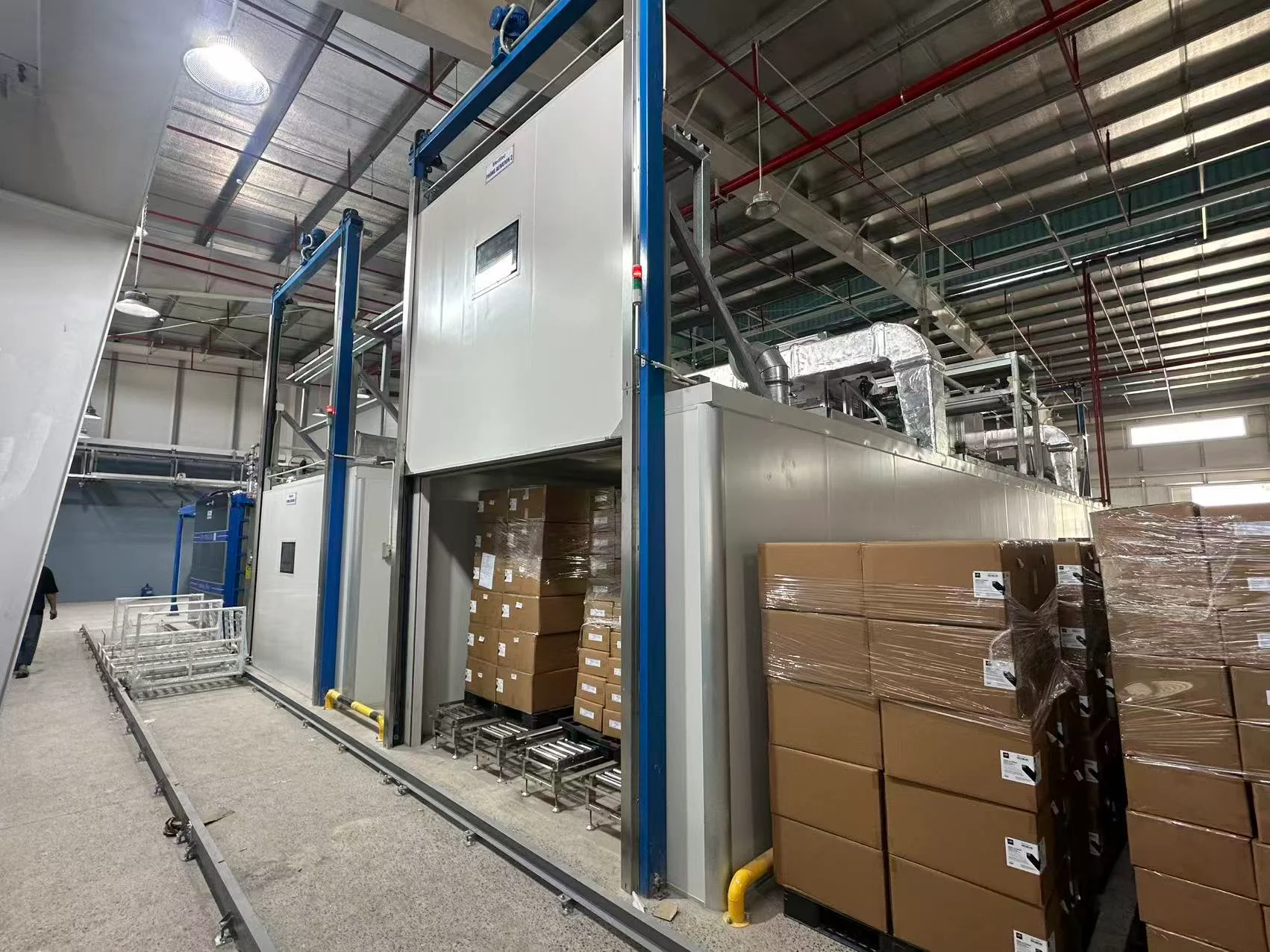
Chamber: The Checks That Get Skipped
Before OQ, the chamber should complete an empty-chamber test with EO at the settings the plant actually intends to use. Four things have to be true at the end of it.
- The cycle runs itself. The chamber completes a full automatic cycle at the setpoints without operator intervention.
- Every parameter is recorded. All parameters required by ISO 11135 clause 9.5.4 are logged and can be held inside an acceptance range — not merely displayed.
- Steam, not water, is injected. Humidification must deliver vapour; condensate reaching the chamber wets the load and distorts the humidity step.
- EO enters as a gas. Injection temperature must be at least 15 °C, measured at the point closest to the chamber.
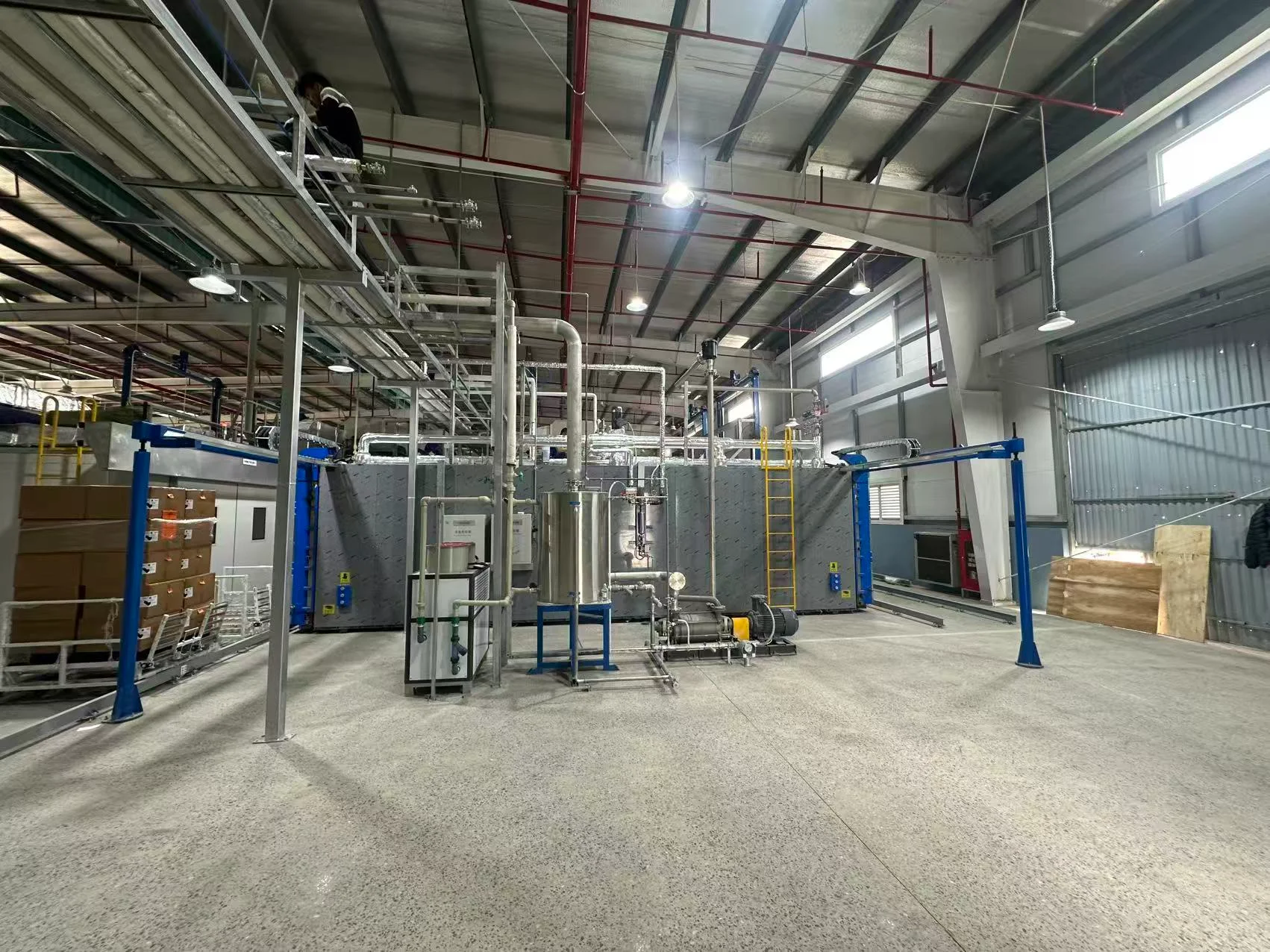
The leak test is a gate, not a formality
The acceptance criterion is a pressure change of no more than 2 kPa over six hours at −80 kPa. If the plant intends to run any positive-pressure cycle, the test is repeated at +50 kPa with the same criterion — a vessel that seals under vacuum can still leak outward under pressure, and the positive test is the one that matters for gas containment.
A failed leak test is almost never the vessel. It is a door seal, a valve seat, a gauge line or a filter housing. Finding it before validation costs an afternoon; finding it during a validation run costs the run.
Sequence trap: the three consecutive empty cycles come after the parameters are agreed and before OQ. Running them earlier is a rehearsal, not evidence — if the parameters change afterwards, the three cycles no longer demonstrate anything.
Aeration Room: Temperature and Air Exchange
The aeration room is judged on two things at IQ: it holds temperature, and it moves enough fresh air to keep removing EO and ethylene chlorohydrin.
| Parameter | Requirement | How it is measured |
|---|---|---|
| Temperature (control and monitoring) | 35–60 °ج | Independent monitoring sensor, recorded continuously |
| Temperature distribution | Max − mean ≤ 10 °C and mean − min ≤ 10 °ج | Distribution mapping across the working volume |
| Fresh air exchange rate | At least 2–3 air changes per hour | Exhaust fan velocity × number of fans ÷ room volume |
| Record | Printout meets the criteria above | Same rule as preconditioning |
The air exchange figure is the one that gets argued about, because it is calculated rather than measured directly. Document the three inputs — fan face velocity, fan count, room volume — and measure them with the room in its normal operating condition. An exchange rate quoted from the design drawing rather than from a measurement will not survive an audit.
Multi-Room Equivalence, Defined Precisely
When a plant runs several rooms of the same design, it will want to treat them as equivalent so that one validation covers all of them. That is acceptable, but “equivalent” has a numeric definition and it is not “they all passed”.
- The distributions must overlap. Room 1 sitting at 30–50 %RH and room 2 at 50–70 %RH both pass the 30–80 %RH envelope, yet they share no common condition — that is not equivalence.
- The non-overlapping part is bounded. Where the ranges do not overlap, the temperature gap may not exceed 5 °ج and the humidity gap may not exceed 10 %RH.
- For aeration rooms, the same overlap rule applies to temperature, and the non-overlapping air exchange difference may not exceed 2 air changes per hour.
Write the equivalence argument as a short table: room, mapped range, overlap with the reference room, and the residual gap. A reviewer can check that in a minute, which is exactly what you want.
Software Validation Evidence
Software is where readiness most often fails, because it is the part nobody maps and the part that has the most documents. Where the validation is commissioned by a third party, the expectation is that the software is validated on the installed machine, by the sterilizer or its software supplier, against current FDA and ISO 11135 expectations — not borrowed from another site running “the same” system.
Six items make up the minimum evidence package:
- Equipment identification — model and serial number recorded.
- Software identification — name and version, matching what is installed.
- Access control — the permission level of each user role demonstrated, including what an operator cannot do.
- Function check by screen — every button on every interface tested, not a sample.
- Alarm verification — each alarm triggered and its response recorded.
- Audit trail — present, enabled, and shown to be non-editable.
The audit trail item deserves emphasis: if cycle data can be altered after generation, every other record in the validation becomes arguable. It is also the first thing a reviewer asks to see.
People, Documents and Procurement Order
Three non-technical items decide how the week actually goes.
- Qualified people on site. The plant should assign staff who know the equipment and can answer for it during the validation — not a coordinator who has to phone someone for every question.
- Documents ready before the visit. IQ reports, distribution maps, leak test records, calibration certificates, software validation and the agreed parameter sheet. Anything still “being tidied up” will be requested twice.
- Technical requirements before price. Equipment bought on price first and specification afterwards is the most common source of validation surprises, because the chamber arrives without the features the validation assumes — independent monitoring sensors, recorded gas weight, a data trail that cannot be edited.
The last one is worth saying plainly: a specification written after the purchase order is a change order, and in a validation schedule there is no room for one.
الأسئلة المتداولة
How long before validation should IQ be completed?
Before the validation starts, not during it. IQ for the rooms and the chamber is written against the current ISO 11135 and the applicable QSR requirements, and the three consecutive empty cycles at the agreed parameters have to be finished before OQ begins.
What is the acceptance criterion for room temperature distribution?
Maximum minus mean and mean minus minimum must each stay within 10 °C, with humidity inside the 30–80 %RH envelope. The assessment is made on the room printout, which is why the printout interval has to be short enough to show the excursion.
What leak test limits apply to an EO chamber?
No more than 2 kPa of pressure change over six hours at −80 kPa. If any cycle runs at positive pressure, repeat the test at +50 kPa with the same acceptance criterion.
Why three consecutive empty chamber cycles?
One cycle shows the chamber can run. Three consecutive cycles at the agreed parameters show it repeats — same pressure profile, same humidity step, same gas weight — which is the evidence OQ builds on. Any parameter change after that restarts the count.
Can several rooms of the same design share one validation?
Yes, if the distributions overlap and the non-overlapping part is bounded: 5 °C for temperature, 10 %RH for humidity, and 2 air changes per hour for aeration rooms. Rooms that all pass the envelope but share no common condition are not equivalent.
Read next: EO sterilization facility requirements — how the rooms, chamber and aeration area have to be built and sized for the criteria on this page.
Want a readiness check before the auditors arrive?
Send the chamber size, the room layout and the parameters you intend to validate. ZJBOCON engineers return a gap list against the criteria above — what is already covered by IQ, what still needs a distribution map, and what will be asked for on the day.
تفضل البريد الإلكتروني؟ إرسال استفسار فني من خلال نموذج الاتصال.
Reference: ISO 11135:2014 (clauses 9.5.4 and 11), current FDA QSR expectations for IQ/OQ/PQ, and the room acceptance criteria typically set by the party commissioning the validation. Confirm the figures against your own validation protocol.