How Does Ethylene Oxide Gas Sterilization Kill Microorganisms?
How Does Ethylene Oxide Gas Sterilization Work?
The effectiveness of ethylene oxide gas sterilization lies in its ability to disrupt the cellular structure of microorganisms. Here’s a step-by-step breakdown of how it works:
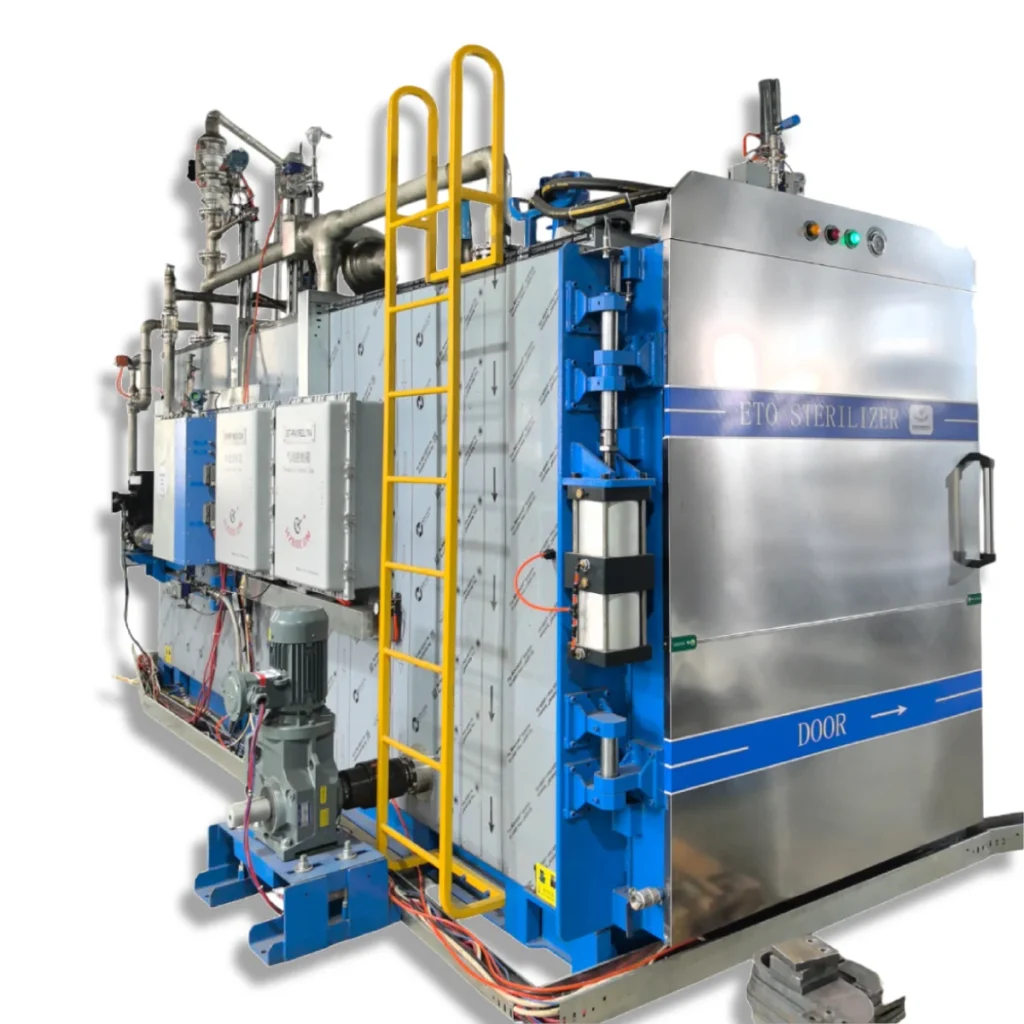
1.Penetration of EO Gas
Ethylene oxide gas is highly penetrative, meaning it can easily reach microorganisms even in hard-to-access areas, such as crevices, pores, and complex device designs. This ensures thorough sterilization of the entire item.
2.Alkylation: The Key Mechanism
The primary way ethylene oxide kills microorganisms is through a chemical process calledalkylation. EO gas reacts with the DNA, RNA, and proteins of microbial cells, disrupting their cellular functions. Specifically, it:
- Damages DNA: EO gas alkylates the nucleic acids in DNA, preventing microorganisms from reproducing.
- Disrupts Proteins: It alters essential proteins and enzymes, rendering them nonfunctional.
- Destroys Cell Membranes: EO gas disrupts the cell walls and membranes, leading to cell death.
3.Irreversible Damage
The alkylation process causes irreversible damage to the microorganisms’ cellular components. Once their DNA, proteins, and membranes are compromised, the microorganisms cannot survive or replicate.
The Sterilization Process
To ensure complete sterilization, ethylene oxide gas sterilization follows a carefully controlled process:
- Preconditioning: The items are exposed to controlled temperature and humidity to prepare them for sterilization.
- Vacuum Phase: Air is removed from the sterilization chamber to create a vacuum, allowing EO gas to penetrate deeply.
- Gas Exposure: EO gas is introduced into the chamber at a specific concentration and maintained for a set period (typically 1-6 hours).
- Aeration: After sterilization, the items are aerated to remove any residual EO gas, ensuring they are safe for use.
Why is Ethylene Oxide Gas Sterilization So Effective?
- Broad-Spectrum Efficacy: EO gas is effective against all types of microorganisms, including bacteria, viruses, fungi, and even highly resistant spores.
- Low-Temperature Process: It operates at low temperatures (30-60°C), making it ideal for heat-sensitive materials.
- Deep Penetration: EO gas can sterilize complex and porous materials that other methods cannot reach.
- Versatility: It is suitable for a wide range of materials, including plastics, rubber, and metals.
Applications of Ethylene Oxide Gas Sterilization
Ethylene oxide gas sterilization is used in various industries, including:
- Medical Devices: Surgical instruments, catheters, implants, and other heat-sensitive equipment.
- Pharmaceuticals: Sterilization of drugs and biologics that cannot withstand high temperatures.
- Laboratory Equipment: Tools like petri dishes, pipettes, and other labware.
- Industrial Uses: Sterilization of packaging materials, cosmetics, and certain food products.
Safety Considerations
While ethylene oxide gas sterilization is highly effective, it requires strict safety measures due to the toxic and flammable nature of EO gas:
- Proper Ventilation: Ensure the sterilization area is well-ventilated to prevent gas accumulation.
- Personal Protective Equipment (PPE): Operators should wear gloves, masks, and goggles to minimize exposure.
- Monitoring: Regularly check EO gas levels in the workplace to ensure they remain within safe limits.
- Training: Staff must be trained in handling EO sterilizers and emergency procedures.
Key figures
| Condition | Typical value | Role in the kill mechanism |
|---|---|---|
| Chamber temperature | 30–60 °C | Keeps the load below heat-damage thresholds while EO remains reactive |
| Exposure time | 1–6 hours | Time at concentration for alkylation to reach the target SAL |
| Humidity | Controlled during conditioning | Hydrates the cell so EO can penetrate and react |
| Mechanism | Alkylation of DNA, RNA and proteins | Covalent change that the cell cannot repair |
| Penetration | Through packaging and lumens | Why EO suits sealed, pre-packaged medical devices |
Frequently asked questions
How does EO reach microorganisms inside packaging and lumens?
EO is highly penetrative. It diffuses through packaging, crevices, pores and complex device geometry, so the gas reaches surfaces that liquid sterilants or steam cannot, which is why the load can be sterilized in its final packaging.
What is alkylation and why is it lethal?
EO reacts chemically with DNA, RNA and proteins, attaching alkyl groups to them. DNA is alkylated so the cell can no longer replicate, enzymes lose their function, and cell walls and membranes are disrupted.
Why is the damage irreversible?
Because the alkylation is a covalent change to the cell’s nucleic acids and proteins. Once DNA, proteins and membranes are compromised the microorganism cannot repair itself, survive or reproduce.
Which microorganisms does EO inactivate?
All classes — bacteria, viruses, fungi and highly resistant bacterial spores. That broad-spectrum activity is one reason the process can be validated to a sterility assurance level rather than for a single target organism.
What are the process conditions that make it work?
Preconditioning to controlled temperature and humidity, a vacuum phase to remove air, gas exposure at a set concentration for one to six hours, then aeration to remove residuals. Typical chamber temperature is 30–60 °C, which is why heat-sensitive materials survive.
IF YOU WANT TO KNOW MORE about bocon eto sterilizer
Phone:+8619975258603
Email:hayley@hzbocon.com
Local Site: Room 1202, Caitong Zhongxin, Xiasha District, Hangzhou City, Zhejiang Province, China
Website:hzbocon.comzjbocon.com