How Does Ethylene Oxide Gas Sterilization Work?
The effectiveness of ethylene oxide gas sterilization lies in its ability to disrupt the cellular structure of microorganisms. Here’s a step-by-step breakdown of how it works:
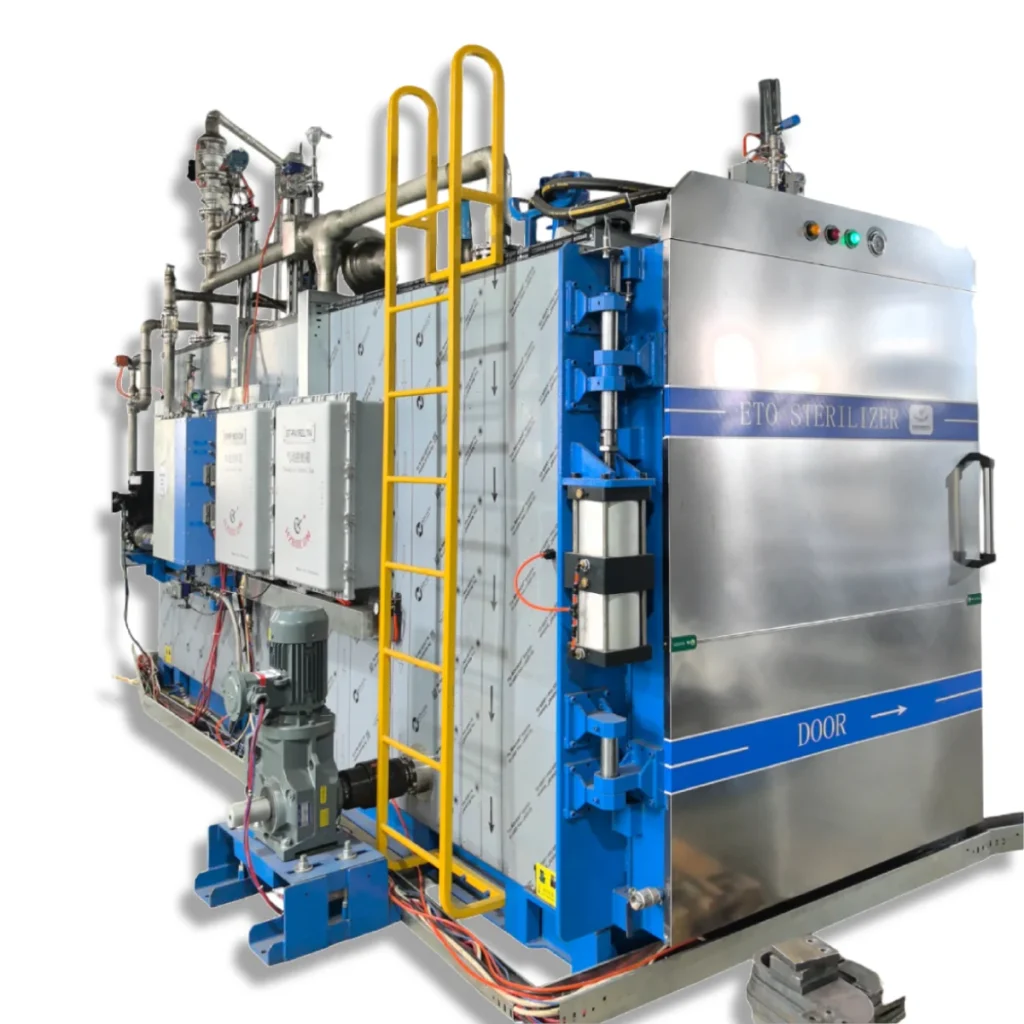
1.Penetration of EO Gas
Ethylene oxide gas is highly penetrative, meaning it can easily reach microorganisms even in hard-to-access areas, such as crevices, pores, and complex device designs. This ensures thorough sterilization of the entire item.
2.Alkylation: The Key Mechanism
The primary way ethylene oxide kills microorganisms is through a chemical process calledalkylation. EO gas reacts with the DNA, RNA, and proteins of microbial cells, disrupting their cellular functions. Specifically, it:
- Damages DNA: EO gas alkylates the nucleic acids in DNA, preventing microorganisms from reproducing.
- Disrupts Proteins: It alters essential proteins and enzymes, rendering them nonfunctional.
- Destroys Cell Membranes: EO gas disrupts the cell walls and membranes, leading to cell death.
3.Irreversible Damage
The alkylation process causes irreversible damage to the microorganisms’ cellular components. Once their DNA, proteins, and membranes are compromised, the microorganisms cannot survive or replicate.
Ang Proseso sa Sterilisasyon
To ensure complete sterilization, ethylene oxide gas sterilization follows a carefully controlled process:
- Preconditioning: The items are exposed to controlled temperature and humidity to prepare them for sterilization.
- Vacuum Phase: Air is removed from the sterilization chamber to create a vacuum, allowing EO gas to penetrate deeply.
- Gas Exposure: EO gas is introduced into the chamber at a specific concentration and maintained for a set period (typically 1-6 hours).
- Aeration: After sterilization, the items are aerated to remove any residual EO gas, ensuring they are safe for use.
Why is Ethylene Oxide Gas Sterilization So Effective?
- Lapad nga Spectrum nga Kaepektibo: EO gas is effective against all types of microorganisms, including bacteria, viruses, fungi, and even highly resistant spores.
- Ubos nga Temperatura nga Proseso: It operates at low temperatures (30-60°C), making it ideal for heat-sensitive materials.
- Lawom nga pagsulod: EO gas can sterilize complex and porous materials that other methods cannot reach.
- Daghag gamit: It is suitable for a wide range of materials, including plastics, rubber, and metals.
Applications of Ethylene Oxide Gas Sterilization
Ethylene oxide gas sterilization is used in various industries, including:
- Medical Devices: Mga instrumento sa pag-opera, mga catheter, mga implant, ug uban pang kagamitan nga sensitibo sa kainit.
- Pharmaceuticals: Sterilisasyon sa mga tambal ug biologic nga dili makasugakod sa taas nga temperatura.
- Mga Kagamitan sa Laboratory: Mga himan sama sa petri dishes, pipette, ug uban pang labware.
- Mga gamit sa industriya: Sterilisasyon sa mga materyales sa pagputos, mga kosmetiko, ug pipila ka mga produkto sa pagkaon.
Safety Considerations
While ethylene oxide gas sterilization is highly effective, it requires strict safety measures due to the toxic and flammable nature of EO gas:
- Tukma nga bentilasyon: Ensure the sterilization area is well-ventilated to prevent gas accumulation.
- Personal Protective Equipment (PPE): Operators should wear gloves, masks, and goggles to minimize exposure.
- Monitoring: Regularly check EO gas levels in the workplace to ensure they remain within safe limits.
- Pagbansay: Staff must be trained in handling EO sterilizers and emergency procedures.
KUNG GUSTO KA MAKAHIBALO DUGANG bahin sa bocon eto sterilizer
Telepono:+8619975258603
Email:hayley@hzbocon.com
Lokal nga Dapit: Room 1202, Caitong Zhongxin, Xiasha District, Hangzhou City, Zhejiang Province, China
Website:hzbocon.comzjbocon.com