环氧乙烷气体灭菌如何杀死微生物?
环氧乙烷气体灭菌如何工作?
环氧乙烷气体灭菌的有效性在于其能够破坏微生物的细胞结构。以下是其工作原理的逐步分解:
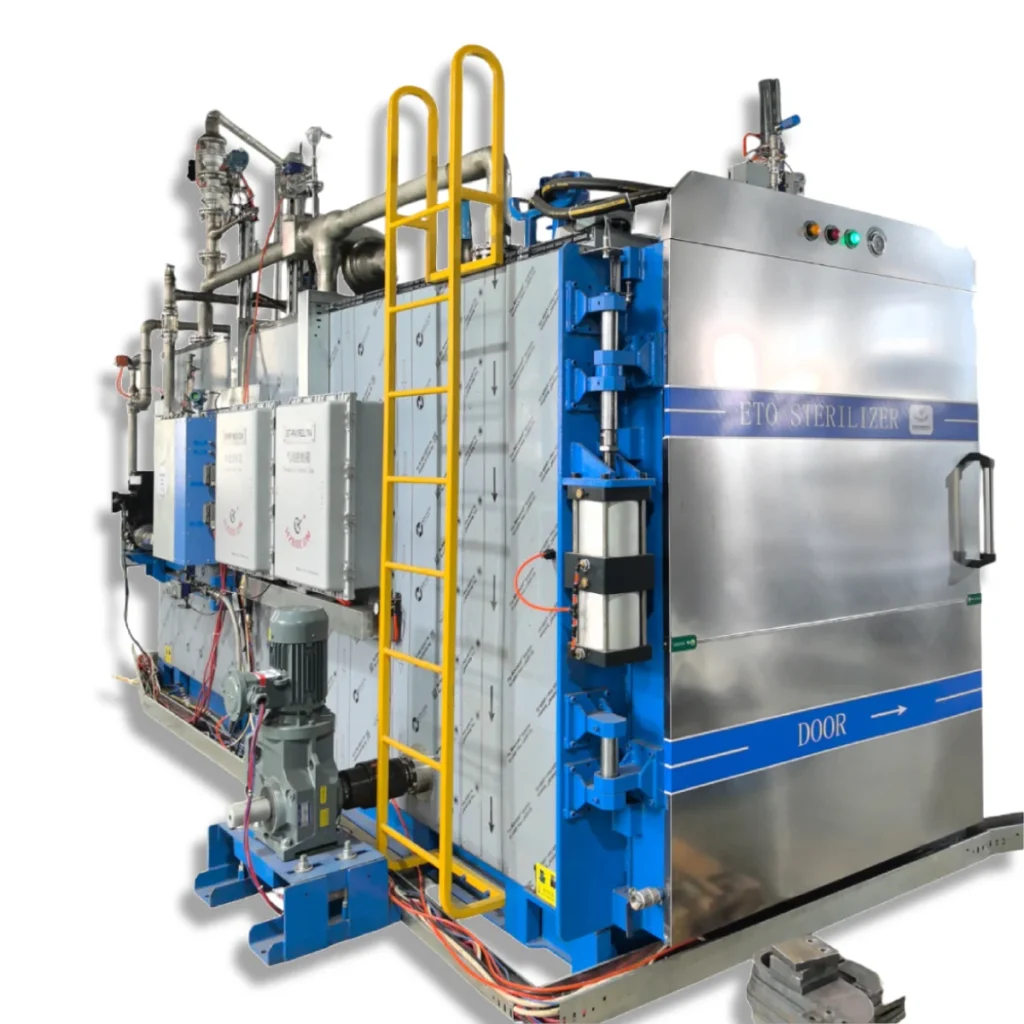
1.EO气体的渗透
环氧乙烷气体具有高度渗透性,这意味着即使在难以进入的区域(例如缝隙、孔隙和复杂的设备设计),它也可以轻松接触微生物。这确保了整个物品的彻底灭菌。
2.烷基化:关键机制
环氧乙烷杀死微生物的主要方式是通过称为烷基化。 EO 气体与微生物细胞的 DNA、RNA 和蛋白质发生反应,破坏其细胞功能。具体来说,它:
- 损害DNA: EO 气体烷基化 DNA 中的核酸,防止微生物繁殖。
- 破坏蛋白质: 它会改变必需的蛋白质和酶,使它们失去功能。
- 破坏细胞膜: 环氧乙烷气体会破坏细胞壁和细胞膜,导致细胞死亡。
3.不可逆转的损害
烷基化过程会对微生物的细胞成分造成不可逆的损害。一旦 DNA、蛋白质和细胞膜受到损害,微生物就无法生存或复制。
灭菌过程
为了确保彻底灭菌,环氧乙烷气体灭菌遵循严格控制的流程:
- 预处理: 将物品暴露在受控的温度和湿度下,为灭菌做好准备。
- 真空阶段: 从灭菌室中除去空气以形成真空,使 EO 气体能够深入渗透。
- 气体暴露: 将特定浓度的 EO 气体引入腔室并维持设定的时间(通常为 1-6 小时)。
- 通风: 灭菌后,物品将被曝气以去除任何残留的环氧乙烷气体,确保它们可以安全使用。
为什么环氧乙烷气体灭菌如此有效?
- 广谱疗效: EO 气体可有效对抗所有类型的微生物,包括细菌、病毒、真菌,甚至是高度耐药的孢子。
- 低温过程: 它在低温 (30-60°C) 下运行,非常适合热敏材料。
- 深度渗透: EO 气体可以对其他方法无法达到的复杂和多孔材料进行灭菌。
- 多功能性: 它适用于多种材料,包括塑料、橡胶和金属。
环氧乙烷气体灭菌的应用
环氧乙烷气体灭菌用于多种行业,包括:
- 医疗设备: 手术仪器,导管,植入物和其他热敏设备。
- 药品: 无法承受高温的药物和生物制剂的灭菌。
- 实验室设备: 培养皿,移液器和其他实验室等工具。
- 工业用途: 包装材料,化妆品和某些食品的灭菌。
安全考虑
虽然环氧乙烷气体灭菌非常有效,但由于环氧乙烷气体有毒且易燃,因此需要严格的安全措施:
- 适当的通风: 确保灭菌区域通风良好,防止气体积聚。
- 个人保护设备(PPE): 操作人员应佩戴手套、口罩和护目镜,以尽量减少接触。
- 监控: 定期检查工作场所的 EO 气体浓度,确保其保持在安全范围内。
- 训练: 工作人员必须接受操作环氧乙烷灭菌器和应急程序的培训。
关键数据
| Condition | Typical value | Role in the kill mechanism |
|---|---|---|
| Chamber temperature | 30–60℃ | Keeps the load below heat-damage thresholds while EO remains reactive |
| Exposure time | 1–6 hours | Time at concentration for alkylation to reach the target SAL |
| 湿度 | Controlled during conditioning | Hydrates the cell so EO can penetrate and react |
| 机制 | Alkylation of DNA, RNA and proteins | Covalent change that the cell cannot repair |
| Penetration | Through packaging and lumens | Why EO suits sealed, pre-packaged medical devices |
常见问题
How does EO reach microorganisms inside packaging and lumens?
EO is highly penetrative. It diffuses through packaging, crevices, pores and complex device geometry, so the gas reaches surfaces that liquid sterilants or steam cannot, which is why the load can be sterilized in its final packaging.
What is alkylation and why is it lethal?
EO reacts chemically with DNA, RNA and proteins, attaching alkyl groups to them. DNA is alkylated so the cell can no longer replicate, enzymes lose their function, and cell walls and membranes are disrupted.
Why is the damage irreversible?
Because the alkylation is a covalent change to the cell’s nucleic acids and proteins. Once DNA, proteins and membranes are compromised the microorganism cannot repair itself, survive or reproduce.
Which microorganisms does EO inactivate?
All classes — bacteria, viruses, fungi and highly resistant bacterial spores. That broad-spectrum activity is one reason the process can be validated to a sterility assurance level rather than for a single target organism.
What are the process conditions that make it work?
Preconditioning to controlled temperature and humidity, a vacuum phase to remove air, gas exposure at a set concentration for one to six hours, then aeration to remove residuals. Typical chamber temperature is 30–60 °C, which is why heat-sensitive materials survive.
如果您想进一步了解Bocon Eto灭菌器
电子邮件:hayley@hzbocon.com
办公室地址:浙江省杭州市下沙财通中心1202 工厂地址:浙江省嘉兴市嘉善县罗星同济未来邨6幢厂房