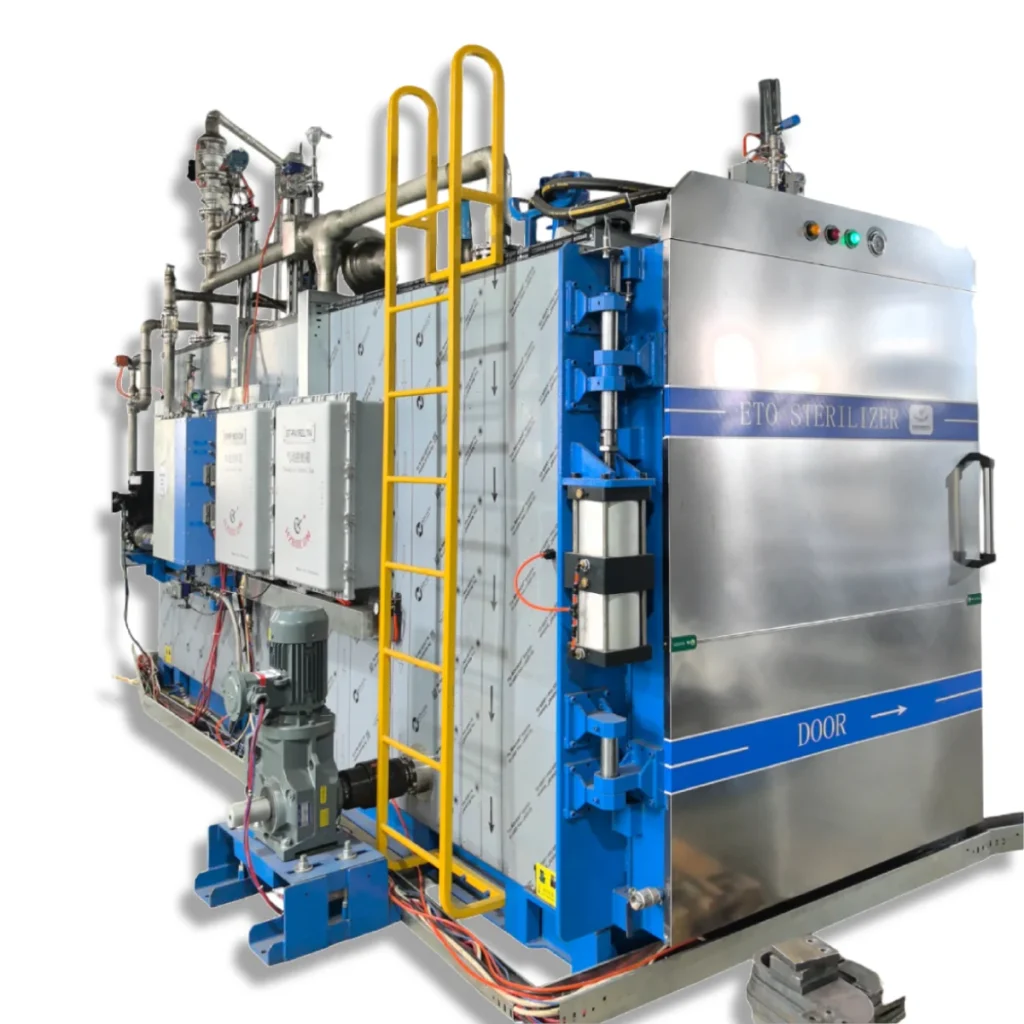
Ngezinhloso zalo mbhalo, imigomo nezincazelo ezilandelayo zisebenza ku ukukhishwa kwe-ethylene oxide

ingxenye yenqubo yokuvala inzalo yegesi ye-eto lapho i-ethylene oxide kanye/noma yayo
imikhiqizo yokusabela desorb kusukela kudivayisi yezokwelapha kuze kufike amazinga anqunywe kusengaphambili
Qaphela 1 kokufakwayo: Lokhu kungenziwa ngaphakathi kwesibulala-magciwane kanye/noma ekamelweni elihlukile noma igumbi.
3.2 indawo yokungenisa umoya
kungaba ikamelo noma igumbi lapho umoya kungena khona
3.3 I-Bioburden
inani lama-microorganisms asebenzayo emkhiqizweni kanye/noma ohlelweni lwesithiyo oyinyumba
[UMTHOMBO: ISO/TS 11139:2006, incazelo 2.2]
3.4 inkomba yezinto eziphilayo
isistimu yokuhlola equkethe ama-microorganisms asebenzayo anikeza ukumelana okuchaziwe kunqubo ecacisiwe yokuvala inzalo yegesi ye-eto
3.5 Ukulinganisa
isethi yemisebenzi esungula, ngaphansi kwezimo ezithile, ubudlelwano phakathi kwamanani wenani eliboniswa ithuluzi lokulinganisa noma ukulinganisa.
uhlelo, noma amanani amelwe isilinganiso esibonakalayo noma into eyisethenjwa, kanye namanani ahambisanayo atholwa ngamazinga
3.6 inkomba yamakhemikhali
isistimu yokuhlola eveza ushintsho kokuguquguqukayo kwenqubo eyodwa noma ngaphezulu echazwe ngaphambilini
ngokusekelwe oguqukweni lwamakhemikhali noma lomzimba olubangelwa ukuchayeka enqubweni ethile
[UMTHOMBO: ISO/TS 11139:2006, incazelo 2.6]
ukwelashwa komkhiqizo ngaphakathi komjikelezo we-eto gas sterilization, kodwa ngaphambi kwe-ethylene
ukungena kwe-oxide, ukuthola izinga lokushisa elinqunywe kusengaphambili kanye nomswakama ohlobene
Qaphela 1 kokufakwayo: Le ngxenye yomjikelezo we-ethylene oxide sterilization ingenziwa ngengcindezi yomkhathi noma ngaphansi kwe-vacuum.
Qaphela 2 kokufakwayo: Bheka 3.27, preconditioning
3.8 D inani
DOkuthenyalwayo inani
isikhathi noma umthamo odingekayo ukuze kufinyelelwe ukungasebenzi kwama-90% wabantu be-microorganism yokuhlola ngaphansi kwezimo ezishiwo.
[UMTHOMBO: ISO/TS 11139:2006, incazelo 2.11] ?
Qaphela 1 kokufakwayo: Ngezinjongo zaleli Zinga lamazwe ngamazwe, i D inani isikhathi sokuchayeka esidingekayo ukuze kufinyelelwe ukungasebenzi okungama-90 % kwenani labantu bendawo yokuhlola.
3.9 Intuthuko
isenzo sokuchaza imininingwane
[UMTHOMBO: ISO/TS 11139:2006, incazelo 2.13]
3.10 iphuzu lamazolo
Izinga lokushisa lapho ingcindezi yomhwamuko wamanzi saturation ilingana ne
ukucindezela okuyingxenye komphunga wamanzi emkhathini
Inothi 1 lokungena: Noma yikuphi ukupholisa komkhathi ngaphansi kwendawo yamazolo kungaveza ukuminyana kwamanzi.
3.11 Sungula
nquma ngokuhlola kwethiyori futhi uqinisekise ngokuhlola
[UMTHOMBO: ISO/TS 11139:2006, incazelo 2.17]
9ISO 11135-2014
3.12 isikhathi sokujova i-ethylene oxide (EO).
ubude besiteji siqala ngokwethulwa kokuqala kwe-EO (ingxube) ekamelweni kuze kuqedwe lowo mjovo.
3.13 isikhathi sokuchayeka
isikhathi lapho imingcele yenqubo igcinwa ngaphakathi kokubekezelelana kwayo okucacisiwe
[UMTHOMBO: ISO/TS 11139:2006, incazelo 2.18]
Qaphela 1 kokufakwa: Ngenhloso yokubala umjikelezo obulalayo, isikhathi sokwenziwa inzalo kwe-ethylene oxide phakathi kokuphela komjovo we-EO kanye nokuqala kokususwa kwe-EO.
3.14 Iphutha
ipharamitha eyodwa noma ngaphezulu yenqubo elele ngaphandle kwayo/yayo eshiwo
ukubekezelelana
[UMTHOMBO: ISO/TS 11139:2006, incazelo 2.19]
3.15 Ukuhlanza
inqubo lapho i-ethylene oxide ikhishwa emthwalweni nasegumbini
ngokuvuma okunye okuningi komoya ohlungiwe, igesi engasebenzi noma isitimu kanye nokuphuma kwegumbi noma ukudlula okuqhubekayo komoya ohlungiwe, igesi ye-inert 10ISO 11135-2014 noma isimusi phakathi komthwalo negumbi.
3.16 umjikelezo wamaqhezu
umjikelezo lapho isikhathi sokuchayeka kugesi ye-EO sincishisiwe uma siqhathaniswa nalokho
okucaciswe kunqubo ye-ethylene oxide inzalo
3.17 uhhafu womjikelezo
umjikelezo lapho isikhathi sokuchayeka kugesi ye-EO sincipha ngo-50 % uma kuqhathaniswa nalowo oshiwo enqubweni yokuvala inzalo ye-ethylene oxide
3.18 isikhungo sokunakekelwa kwezempilo
izinhlangano zikahulumeni nezizimele kanye nezikhungo ezizinikele ku
ukugqugquzelwa nokugcinwa kwezempilo, kanye nokuvinjelwa nokwelashwa
izifo nokulimala
ISIBONELO Isikhungo sokunakekelwa kwezempilo kungaba yisibhedlela, ikhaya labahlengikazi, indawo yokunakekela enwetshiwe, isikhungo sokuhlinza samahhala, umtholampilo, ihhovisi lezokwelapha, noma ihhovisi lamazinyo.
3.19 umkhiqizo wokunakekelwa kwezempilo
i(izi)setshenziswa zokwelapha, okuhlanganisa ku-vitro idivayisi(s) yezokwelapha ezixilongayo, noma imikhiqizo yokwelapha, kuhlanganisa ne(s) biopharmaceutical
11 ISO 11135-2014
[UMTHOMBO: ISO/TS 11139:2006, incazelo 2.20]
inqubo yokuthola kanye nokubhala ubufakazi bokuthi okokusebenza kuhlinzekiwe
futhi ifakwe ngokuhambisana nokucaciswa kwayo
[UMTHOMBO: ISO/TS 11139:2006, incazelo 2.22]
3.21 idivayisi yezokwelapha
noma iyiphi insimbi, okokusebenza, okokusebenza, umshini, into esetshenziswayo, into efakwayo, ku-vitro i-reagent noma i-calibrator, isofthiwe, impahla noma i-athikili ehlobene, ehloselwe umenzi ukuthi isetshenziswe, yedwa noma inhlanganisela, kubantu ngenjongo eyodwa noma ngaphezulu
- ukuxilongwa, ukuvimbela, ukuqapha, ukwelashwa noma ukunciphisa izifo,
- ukuxilongwa, ukuqapha, ukwelashwa, ukunciphisa, noma isinxephezelo sokulimala,
- uphenyo, ukushintshwa noma ukuguqulwa noma ukusekelwa kwe-anatomy noma inqubo ye-physiological,
- ukulawula ukukhulelwa,
- ukukhishwa kwemishini yezokwelapha,
- ukuhlinzeka ngolwazi ngezinjongo zokwelapha ngokusebenzisa ku-vitro ukuhlolwa kwezibonelo ezithathwe emzimbeni womuntu, futhi okungaphumeleli isenzo sawo esiyinhloko esihlosiwe emzimbeni noma emzimbeni womuntu ngezindlela ze-pharmacological, immunological noma metabolic, kodwa ezingasizwa emsebenzini wawo ngalezo zindlela.
[UMTHOMBO: ISO 13485:2003, incazelo 3.7]
?
3.22 microorganism
usayizi we-microscopic, ohlanganisa amagciwane, isikhunta, i-protozoa nama-virus
Qaphela 1 kokufakwayo: Izinga elithile lingase lingadingi ukuboniswa kwe
ukusebenza kahle kwenqubo yokuvala inzalo yegesi ye-eto ekwenzeni zonke izinhlobo ze
ama-microorganisms, ahlonzwe encazelweni engenhla, ukuze aqinisekiswe kanye/noma
ukulawulwa okujwayelekile kwenqubo yokuvala inzalo yegesi ye-eto.
inqubo yokuthola kanye nokubhala ubufakazi obufaka imishini
isebenza ngaphakathi kwemikhawulo enqunyiwe uma isetshenziswa ngokuhambisana nayo
izinqubo zokusebenza
[UMTHOMBO: ISO/TS 11139:2006, incazelo 2.27]
3.24 indlela yokweqisa
indlela esebenzisa inqubo yokuvala inzalo yegesi ye-eto eletha ubuncane be-12 Spore Log
Ukunciphisa (SLR) kunkomba yebhayoloji enokumelana okulingana noma okukhulu kunomthwalo wezinto eziphilayo zomkhiqizo
3.25 ukukhishwa kwepharamitha
isimemezelo sokuthi umkhiqizo uyinyumba, ngokusekelwe kumarekhodi abonisa ukuthi imingcele yenqubo yalethwa ngaphakathi kokubekezelela okucacisiwe
[UMTHOMBO: ISO/TS 11139:2006, incazelo 2.29]
Qaphela 1 kokufakwayo: Le ndlela yokukhishwa kwenqubo ayifaki ukusetshenziswa kwezinkomba zebhayoloji.
inqubo yokuthola kanye nokubhala ubufakazi bokuthi okokusebenza, njengoba kufakiwe futhi kusetshenziswa ngokuhambisana nezinqubo zokusebenza, kusebenza ngokungaguquguquki ngokuya ngemibandela enqunywe kusengaphambili futhi ngaleyo ndlela kukhiqize umkhiqizo uhlangabezana nencazelo yawo.
[UMTHOMBO: ISO/TS 11139:2006, incazelo 2.30]
ukwelashwa komkhiqizo, ngaphambi komjikelezo wokuvala inzalo yegesi ye-eto, ekamelweni noma ekamelweni ukuze kutholwe izimo ezithile zokushisa nomswakama ohlobene
3.28 inqubo inselele idivayisi
into edizayinelwe ukuhlanganisa ukumelana okuchaziwe kunqubo yokuvala inzalo yegesi ye-aeto futhi isetshenziselwe ukuhlola ukusebenza kwenqubo.
[UMTHOMBO: ISO/TS 11139:2006, incazelo 2.33]
Qaphela 1 kokufakwayo: Ngenhloso yaleli Zinga lamazwe ngamazwe, i-PCD ingakwazi
kube umkhiqizo, umkhiqizo ofanisiwe noma esinye isisetshenziswa esigonyelwe ngqo noma
ngokungaqondile. Bheka u-7.1.6 kanye no-D.7.1.6.
Qaphela 2 kokufakwayo: Kuleli Zinga lamazwe ngamazwe, kwenziwa umehluko phakathi kwe-PCD yangaphakathi ne-PCD yangaphandle. I-PCD yangaphakathi isetshenziselwa ukukhombisa ukuthi umkhiqizo odingekayo we-SAL uyazuzwa. I-PCD etholakala ngaphakathi kwemikhawulo yomkhiqizo noma ikesi lomthumeli womkhiqizo i-PCD yangaphakathi, kuyilapho i-PCD etholakala phakathi kwamakesi omthumeli noma ngaphandle komthwalo i-PCD yangaphandle. I-PCD yangaphandle iyinto eklanyelwe ukusetshenziselwa i-microbiological
ukuqapha imijikelezo yokukhiqiza ejwayelekile.
3.29 ipharamitha yenqubo
inani elishiwo lokuguquguquka kwenqubo
Inothi 1 elizofakwa: Incazelo yenqubo yokuvala inzalo yegesi ye-eto ifaka phakathi
inqubo nemingcele kanye tolerances zabo.
[UMTHOMBO: ISO/TS 11139:2006, incazelo 2.34]
3.30 inqubo eguquguqukayo
isimo ngaphakathi kwenqubo ye-ethylene oxide inzalo, izinguquko ezishintsha ukusebenza kahle kwe-microbicidal
ISIBONELO?Isikhathi, izinga lokushisa, ingcindezi, ukugxilisa ingqondo, umswakama, ubude begagasi.
[UMTHOMBO: ISO/TS 11139:2006, incazelo 2.35]
3.31 isigaba sokucubungula
ukuqoqwa kwemindeni ehlukene yomkhiqizo noma yomkhiqizo engavalwa inzalo
ndawonye
Qaphela 1 kokufakwayo: Yonke imikhiqizo engaphakathi kwesigaba inqunyelwe ukwethula inselele elinganayo noma encane enqubweni yokuvala inzalo ye-ethylene oxide kunohlelo lwenselele idivayisi yalelo qembu.
3.32 Umkhiqizo
umphumela wenqubo
[UMTHOMBO: ISO 9000:2005, incazelo 3.4.2]
Qaphela 1 kokufakwayo: Ngezinjongo zamazinga e-ethylene oxide sterilization, umkhiqizo unjalo
ephathekayo futhi ingaba impahla eluhlaza, i(ama)phakathi), i-sub-assembly(izi) kanye
imikhiqizo yokunakekelwa kwezempilo.
3.33 umndeni womkhiqizo
iqembu lomkhiqizo onezici eziwavumela ukuthi abulawe amagciwane
kusetshenziswa izimo zenqubo echaziwe
3.34 ivolumu yomthwalo womkhiqizo
isikhala esichaziwe ngaphakathi kwevolumu yegumbi elisebenzisekayo elihlala umkhiqizo
3.35 iqoqo lezamasiko elaziwayo
igunya lokufaka imali ngaphansi kweSivumelwano saseBudapest ngo I-International
Ukuqashelwa Kwediphozithi ye
Ama-Microorganisms Ngezinjongo Zelungelo Lobunikazi Nokulawula
[UMTHOMBO: ISO/TS 11139:2006, incazelo 2.38]
3.36 inkomba microorganism
i-microbial strain etholakala eqoqweni elaziwayo lamasiko
3.37 Ukufaneleka
ukuphindaphindwa kwengxenye yokuqinisekisa ngenjongo yokuqinisekisa ukwamukelwa okuqhubekayo kwenqubo ethile
3.38 idivayisi yezokwelapha engasetshenziswa kabusha
idivayisi yezokwelapha ekhethwe noma ehloswe umenzi njengesifanele
ukucutshungulwa kabusha nokusetshenziswa kabusha
Qaphela 1 kokufakwayo: Lena akuyona idivayisi yezokwelapha ekhethiwe noma ehlosiwe
ngomkhiqizi ukuze asetshenziswe kanye kuphela.
3.39 Izinkonzo
izimpahla ezivela emthonjeni wangaphandle, ezidingekayo ukuze kusebenze kahle okokusebenza
ISIBONELO Ugesi, amanzi, umoya ocindezelweyo, ukudonsa amanzi.
[UMTHOMBO: ISO/TS 11139:2006, incazelo 2.41]
3.40 idivayisi yezokwelapha esetshenziswa kanye
idivayisi yezokwelapha ekhethwe noma ehloswe umenzi ukuthi isetshenziswe kanye kuphela
3.41 Cacisa
chaza ngokuningiliziwe ngaphakathi kwedokhumenti egunyaziwe
3.42 Ukuncishiswa kwe-spore-log inombolo yokuqala ye-spore, N0, susa ilogu yabantu bokugcina, Nu
[UMTHOMBO: ISO 14161:2009, incazelo 3.19]
Qaphela 1 kokufakwayo: Ichaza ukuncishiswa kwenani lezinhlamvu ku-a
inkomba yezinto eziphilayo noma into ejovwe ngokuchayeka kokucacisiwe
izimo.
Ukubala Okuqondile:
SLR = ilogi N0 log ? Nu
lapho
N0 inani labantu bokuqala;
Nungabantu bokugcina.
Ngokwengxenye Engalungile:
SLR = ilogi N0 – log [ln (q/n)]
lapho
N0 inani labantu bokuqala;
q yinani lamasampuli aphindaphindiwe ahloliwe;
n yinani lamasampuli angenalo ukukhula.
Uma bengekho abasindile, i-SLR yeqiniso ayikwazi ukubalwa. I-SLR ingaba
kubikwe njengelogi "enkulu kune-". N0 uma kusetshenziswa into eyodwa ephilayo.
3.43 Ayinyumba
mahhala kuma-microorganisms aphilayo
[UMTHOMBO: ISO/TS 11139:2006, incazelo 2.43]
3.44 uhlelo lokuvimba oyinyumba
Iphakethe elincane elivimbela ukungena kwama-microorganisms futhi livumela i-aseptic
ukwethulwa komkhiqizo ngesikhathi sokusetshenziswa
[UMTHOMBO: ISO/TS 11139:2006, incazelo 2.44]
3.45 Ubunyumba
isimo sokukhululeka kuma-microorganisms aphilayo
Qaphela 1 kokufakwayo: Empeleni, asikho isitatimende esinjalo esiphelele mayelana nokungabikho kwama-microorganisms esingafakazelwa.
Qaphela 2 kokufakwayo: Bheka 3.47, ukuvala inzalo.
[UMTHOMBO: ISO/TS 11139:2006, incazelo 2.45]
3.46 izinga lokuqinisekisa ubunyumba
Amathuba e-microorganism eyodwa esebenzayo eyenzeka entweni ngemva kwalokho
ukuvala inzalo
Inothi 1 lokungenela: Itemu elithi SAL lithatha inani lomthamo, ngokuvamile 10-6 noma 10-3. Uma kusetshenziswa leli nani lesilinganiso ekuqinisekiseni ubunyumba, i-SAL ka-10-6 inenani eliphansi kodwa inikeza isiqinisekiso esikhulu sobunyumba kune-SAL ka-10-3.
[UMTHOMBO: ISO/TS 11139:2006, incazelo 2.46]
inqubo eqinisekisiwe esetshenziselwa ukunikeza umkhiqizo mahhala kuma-microorganisms asebenzayo
Qaphela 1 kokufakwayo: Enqubweni yokuvala inzalo, imvelo ye-microbial
ukungasebenzi kunamandla futhi ngaleyo ndlela ukusinda kwe-microorganism entweni ngayinye kungase kuvezwe ngokwamathuba. Ngenkathi lokhu
amathuba angancishiswa abe yinani eliphansi kakhulu, angeke ancishiswe abe nguziro. ISO 11135-2014
Qaphela 2 kokufakwayo: Bheka 3.46, izinga lokuqinisekisa ubunyumba.
[UMTHOMBO: ISO/TS 11139:2006, incazelo 2.47]
3.48 umjikelezo wokuvala inzalo
Ukwelashwa egumbini elivaliwe, okuhlanganisa ukukhishwa komoya, ukupholisa (uma kusetshenziswa), umjovo we-ethylene oxide, igesi engasebenzi (uma isetshenziswa), ukuchayeka ku-ethylene oxide, ukususwa kwe-ethylene oxide nokushaywa (uma kusetshenziswa), kanye nokungeniswa kwegesi yomoya/inert
3.49 umthwalo wokuvala inzalo
umkhiqizo ozoba, noma oseke wafakwa inzalo ndawonye kusetshenziswa into ethile
inqubo yokuvala inzalo
[UMTHOMBO: ISO/TS 11139:2006, incazelo 2.48]
uchungechunge lwezenzo noma imisebenzi edingekayo ukuze kuzuzwe izimfuneko ezishiwo zokuvala inzalo
[UMTHOMBO: ISO/TS 11139:2006, incazelo 2.49]
Inothi 1 okumele lifakwe: Lolu chungechunge lwezenzo noma imisebenzi luhlanganisa ukubeka kuqala imibandela
(uma kunesidingo), ukuchayeka ku-ethylene oxide ngaphansi kwezimo ezichaziwe nanoma yikuphi ukwelashwa okudingekile ngemva kokukhishwa kwe-ethylene oxide kanye nemikhiqizo yayo. Akubandakanyi imisebenzi yokuhlanza, yokubulala amagciwane noma yokupakisha eyandulela inqubo yokuvala inzalo.
3.51 uchwepheshe wokuvala inzalo
umuntu onolwazi lobuchwepheshe lobuchwepheshe bokuvala inzalo obusetshenziswayo kanye nemiphumela yako ezintweni nasezilwanyaneni ezincane
3.52 i-ejenti yokuvala inzalo
ukwenziwa kwamabhizinisi anomsebenzi owanele we-microbicidal ukuze athole ubunyumba ngaphansi kwezimo ezichaziwe
[UMTHOMBO: ISO/TS 11139:2006, incazelo 2.50]
3.53 ijika labasindile
ukumelwa okuyisithombe kokwenziwa kusebenze kwenani lezinambuzane ezincane ngokuchayeka okwandayo kumenzeli we-microbicidal ngaphansi kwezimo ezishiwo.
[UMTHOMBO: ISO/TS 11139:2006, incazelo 2.51]
3.54 ukuhlola ubunyumba
ukusebenza kobuchwepheshe okuchazwe ku-Pharmacopoeia okwenziwa kumkhiqizo kulandela ukuchayeka enqubweni yokuvala inzalo
[UMTHOMBO: ISO/TS 11139:2006, incazelo 2.53]
3.55 ukuhlolwa kobunyumba
ukusebenza kobuchwepheshe okwenziwe njengengxenye yokuthuthukiswa, ukuqinisekiswa, noma
ukufaneleka ukuze kutholwe ubukhona noma ukungabikho kwama-microorganisms asebenzayo emkhiqizweni noma ezingxenyeni zawo
[UMTHOMBO: ISO/TS 11139:2006, incazelo 2.54]
3.56 umthamo wegumbi elisebenzisekayo
indawo echaziwe ngaphakathi kwegumbi lokubulala amagciwane, elingavinjelwe izingxenye ezilungisiwe noma eziphathwayo futhi esitholakalayo ukwamukela umthwalo wokuvala inzalo.
Qaphela 1 kokufakwayo: Ivolumu evunyelwe ukuhamba kwegesi eduze komthwalo ongaphakathi
igumbi alifakiwe njengendawo esebenzisekayo.
inqubo ebhaliwe yokuthola, ukurekhoda kanye nokutolika imiphumela edingekayo ukuze kutholakale ukuthi inqubo izokhiqiza ngokuqhubekayo umkhiqizo ohambisana nezicaciso ezinqunywe kusengaphambili.
[UMTHOMBO: ISO/TS 11139:2006, incazelo 2.55]
3.58 izinto ezimsulwa
impahla engakaze isetshenziswe ngaphambilini, noma engaphansi kokucutshungulwa ngaphandle kokukhiqizwa kwayo kwasekuqaleni
UMA UFUNA UKWAZI OKWENGEZIWE Nge-Ethylene Oxide Sterilization
Ucingo:+8619975258603
I-imeyili:hayley@hzbocon.com
Indawo Yendawo: Igumbi 1202, Caitong Zhongxin, Xiasha District, Hangzhou City, Zhejiang Province, China
Iwebhusayithi:hzbocon.com zjbocon.com