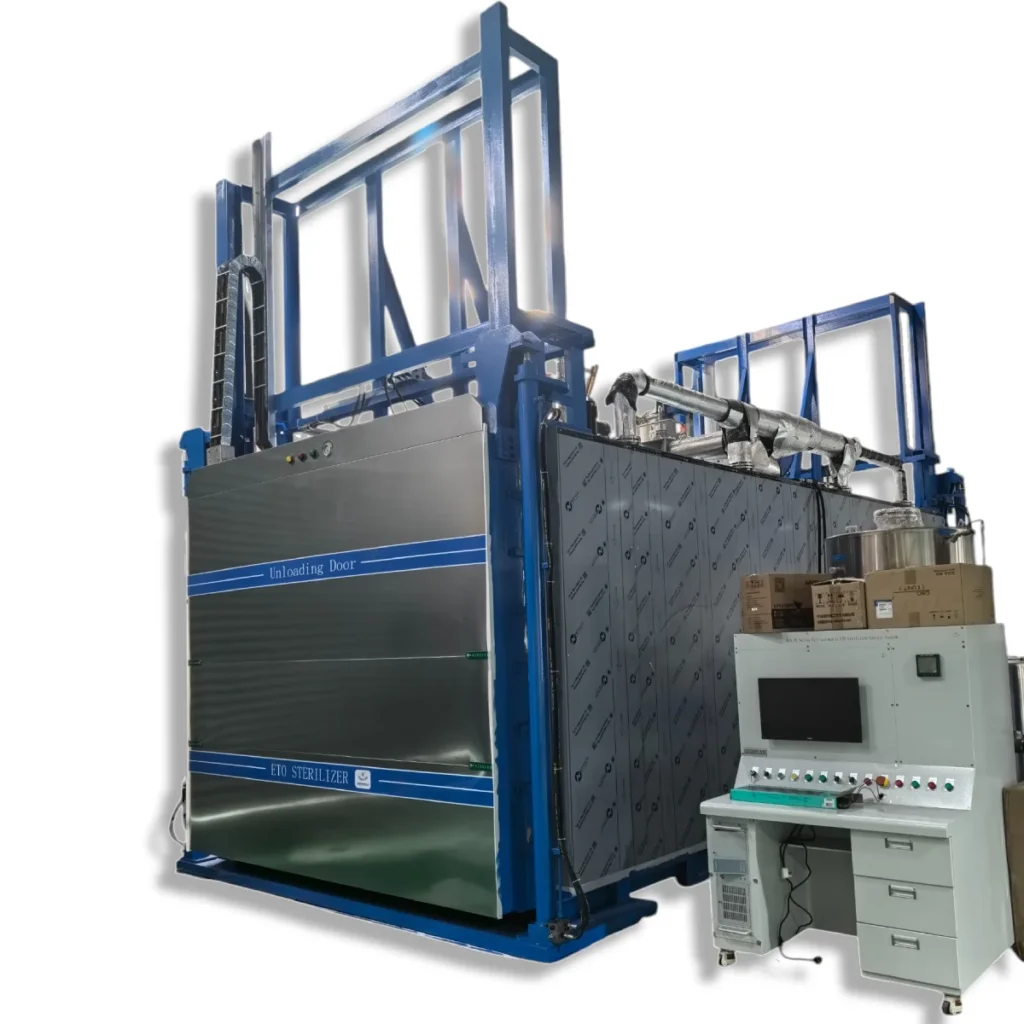
Ethylene oxide (ETO STERILIZATION) kay kaylap nga gigamit isip ubos nga temperatura nga sterilant sa mga industriya sama sa healthcare, pharmaceuticals, ug biotechnology. Apan, tungod sa iyang makahilo, masunog, ug potensyal nga carcinogenic mga kabtangan, hinungdanon nga sundon ang higpit nga mga protocol sa kaluwasan. Kini nga artikulo naglatid sa mahinungdanong mga giya sa kaluwasan alang sa luwas nga pag-opera ETO STERILIZATION mga sistema.
1. Pagsunod sa Regulatoryo para sa ETO STERILIZATION
Aron sa pagsiguro sa usa ka luwas ug compliant ETO STERILIZATION proseso, ang mga kompanya kinahanglang mosunod sa lokal, nasyonal, ug internasyonal nga mga sumbanan sa kaluwasan. Ang pipila ka mahinungdanong mga regulasyon naglakip sa:
- OSHA: Mga regulasyon sa Occupational Safety and Health Administration alang sa kaluwasan sa trabahante kung naggamit sa ETO.
- EPA: Mga giya sa Ahensya sa Pagpanalipod sa Kalikopan alang sa peligrosong mga hugaw sa hangin.
- FDA: Mga giya sa FDA alang sa paggamit sa medikal nga device sterilization ETO STERILIZATION.
- ISO 11135: Internasyonal nga sumbanan alang sa validation ug pagkontrol sa ETO STERILIZATION mga proseso.
- ANSI/AAMI ST41: Sumbanan sa pag-sterilize sa medikal nga mga himan gamit ang ETO STERILIZATION.
2. Ventilation ug Exhaust System para sa ETO STERILIZATION
Tukma nga Bentilasyon
ETO STERILIZATION Naglangkit sa paggamit sa mga volatile organic compounds (VOCs) sama sa ethylene oxide, nga mahimong makadaot kung mahawa. Ang igong bentilasyon gikinahanglan aron mapugngan PAGLINYA buildup sa sterilization lawak ug sa palibot nga mga dapit.
Lokal nga Exhaust Ventilation (LEV)
Pag-instalar og lokal nga exhaust ventilation system aron makuha ang bisan unsang potensyal ETO gas leak sa panahon sa sterilization cycle, maintenance, o emerhensya.
3. Padayon nga Pagmonitor sa Gas Atol sa ETO STERILIZATION
ETO Gas Detection
Pag-instalar padayon ETO gas detector aron mamonitor ang konsentrasyon sa ethylene oxide sa hangin. Ang pagkakalibrate sa kini nga mga detektor hinungdanon alang sa pagsiguro sa tukma nga pagbasa.
Sistema sa Alarm
Pagsangkap ETO STERILIZATION mga sistema nga adunay mga alarma nga nagpaalerto sa mga operator kung kanus-a PAGLINYA ang mga konsentrasyon sa gas milapas sa mga limitasyon sa kaluwasan. Ang threshold kasagarang gibutang sa 1 ppm (mga bahin kada milyon) para sa 8 ka oras nga time-weighted average (TWA).
4. Personal Protective Equipment (PPE) para sa ETO STERILIZATION Operators
Panalipdi nga Panapot
Pagdumala sa mga operator ETO STERILIZATION kinahanglan isul-ob ang mga sistema impermeable nga mga lab coat o mga sapot aron mapanalipdan batok sa pagkaladlad sa panit sa EO.
Proteksyon sa Pagginhawa
Kung nagtrabaho sa mga lugar diin ETO gas konsentrasyon mahimong mas taas kaysa girekomenda, kinahanglan gamiton sa mga operator mga respirator gisangkapan sa mga filter nga angay alang sa ethylene oxide.
Guwantis ug Safety Goggles
Dugang pa sa panalipod nga sinina, ang mga operator kinahanglan nga magsul-ob gwantes nga dili makasugakod sa kemikal ug safety goggles aron malikayan ang direktang kontak sa PAGLINYA.
5. Luwas nga Pagdumala ug Pagtipig sa ETO Gas
Luwas nga Mga Praktis sa Pagtipig
Tindahan Mga silindro sa gas sa ETO sa maayo nga bentilasyon, bugnaw, uga, ug luwas nga mga lugar nga layo sa direkta nga kahayag sa adlaw, mga tinubdan sa kainit, o mga materyales nga masunog. Ang mga lugar nga tipiganan kinahanglan nga klaro nga markahan nga peligroso.
Pagdumala sa mga Protokol
Ang gibansay nga mga personahe lamang ang kinahanglan magdumala Mga silindro sa ETO. Siguruha nga ang tanan nga mga balbula, regulator, ug mga koneksyon maayo nga gipadayon aron malikayan ang pagtagas sa gas.
Safety Data Sheet (SDS)
Kanunay adunay ETO Safety Data Sheet (SDS) anaa, nga naghatag ug importanteng impormasyon sa pagdumala, first aid, pagtubag sa emerhensya, ug posibleng mga kapeligrohan.
6. Paglikay sa Leak ug Detection sa ETO STERILIZATION Systems
Regular nga Pagsusi sa Leak
Kanunay nga susiha ang mga sterilization chamber, mga linya sa suplay sa gas, ug mga selyo alang sa ETO gas leak. Siguruha nga ang bisan unsang posible nga mga punto sa pagtulo matubag dayon aron malikayan ang pagkaladlad.
Mga Pamaagi sa Pagsulay sa Leak
Sa wala pa, sa panahon, ug pagkahuman sa matag siklo sa sterilization, ipahigayon leak testing para matiktikan ang bisan unsa ETO gas leak. Kini nagsiguro nga ang kagamitan sa sterilization luwas nga naglihok.
7. Exposure Limits ug Air Quality Control Atol sa ETO STERILIZATION
Mga Limitasyon sa Exposure sa Trabahoan (PEL)
Ang permissible exposure limit (PEL) para sa ETO nga gas sa trabahoan kasagaran 1 ppm sa 8-oras nga adlaw sa trabaho, nga adunay short-term exposure limit (STEL) nga 5 ppm. Importante kini aron masiguro kini ETO STERILIZATION ang mga operasyon nagpabilin sulod niini nga mga limitasyon.
Pagdumala sa Kalidad sa Hangin
Paggamit mga scrubber o kemikal nga mga filter sa pagtangtang ETO nga gas from exhaust air before releasing it into the atmosphere. This helps minimize the environmental impact and keeps air quality safe.
8. Emergency Response and First Aid for ETO Exposure
Spill Containment Procedures
Create clear procedures for handling ETO gas leak or spills. Ensure that only qualified personnel perform cleanup operations and that the environment is protected from contamination.
First Aid Measures
Trained personnel should know how to respond to ETO exposure:
- Inhalation: Move the affected person to fresh air immediately and seek medical attention.
- Skin Contact: Wash the affected area with water and remove contaminated clothing. If irritation persists, seek medical assistance.
Kaluwasan sa Sunog
Since ETO nga gas is flammable, ensure that fire extinguishers (specifically Class B) are available in areas where ETO STERILIZATION occurs.
9. Training and Standard Operating Procedures (SOPs) para sa ETO STERILIZATION
Pagbansay sa Operator
Ang tanan nga mga operator kinahanglan nga moagi sa hingpit nga pagbansay sa husto nga paggamit sa ETO STERILIZATION mga sistema, lakip ang pagdumala ETO nga gas, pagmonitor sa konsentrasyon niini, ug paggamit sa PPE.
Standard Operating Procedures (SOPs)
Pagtukod ug pagsunod sa mga komprehensibong SOP nga naglangkob sa kinatibuk-an ETO STERILIZATION proseso—gikan sa setup ug operasyon ngadto sa maintenance ug emergency response. Kini nga mga SOP kinahanglan nga susihon ug i-update kanunay.
10. Mga Konsiderasyon sa Kalikopan ug Paglabay sa Basura alang sa ETO STERILIZATION
Pagpanalipod sa Kalikopan
ETO STERILIZATION adunay dakong epekto sa kinaiyahan tungod sa mga greenhouse gases nga nalangkit. Paggamit mga scrubber ug uban pang sistema sa pagdumala sa gas aron mapugngan ang pagpagawas sa PAGLINYA ngadto sa atmospera.
Paglabay sa ETO Residues
Ilabay sa Nagpabilin ang ETO pinaagi sa paggamit pagsunog o sistema sa pagbawi sa gas aron maseguro nga luwas ug responsable sa kinaiyahan ang paglabay.
Panapos
ETO STERILIZATION usa ka epektibo nga paagi sa pag-sterilize sa mga medikal nga himan ug mga tambal, apan kini adunay mga peligro sa kaluwasan. Aron masiguro ang luwas nga operasyon, hinungdanon nga sundon ang higpit nga mga panudlo sa kaluwasan lakip ang husto nga bentilasyon, pag-detect sa gas, personal nga kagamitan sa pagpanalipod (PPE), ug mga pamaagi sa pagtubag sa emerhensya. Ang regular nga pagbansay, pagsunod sa mga sumbanan sa regulasyon, ug ang paggamit sa labing maayo nga mga gawi makapamenos pag-ayo sa mga risgo ug makapanalipod sa mga operator ug sa palibot.
Pinaagi sa pagsunod niini nga mga giya sa kaluwasan, ETO STERILIZATION mahimong magpadayon nga usa ka luwas ug epektibo nga pamaagi alang sa sterilization sa usa ka halapad nga mga industriya.
Kung gusto nimo mahibal-an ang dugang
Telepono:+8619975258603
Email:hayley@hzbocon.com
Lokal nga Dapit: Room 1202, Caitong Zhongxin, Xiasha District, Hangzhou City, Zhejiang Province, China
Website:hzbocon.comzjbocon.com