에틸렌옥사이드 가스 멸균은 어떻게 작동하나요?
에틸렌옥사이드 가스 멸균의 효과는 미생물의 세포 구조를 파괴하는 능력에 있습니다. 작동 방식에 대한 단계별 분석은 다음과 같습니다.
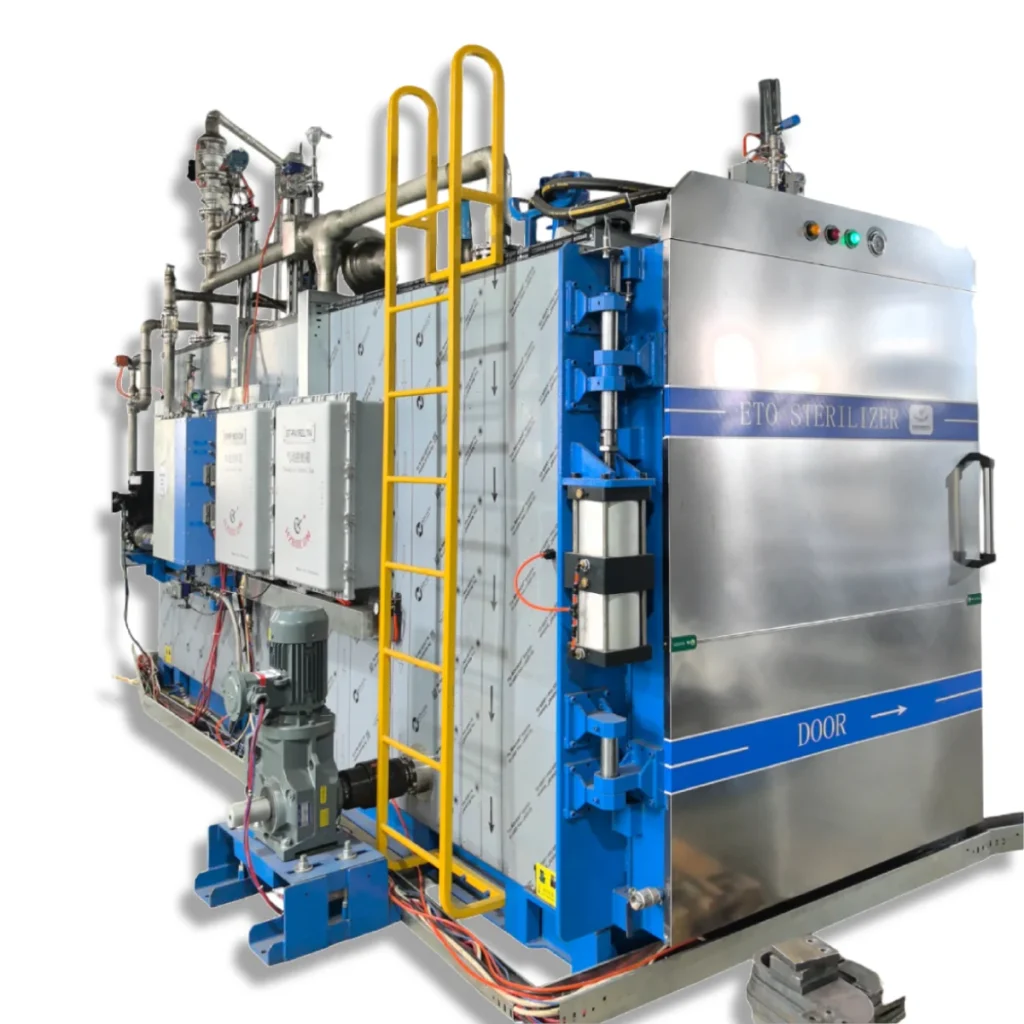
1.EO 가스 침투
산화에틸렌 가스는 침투성이 뛰어나 틈새, 기공, 복잡한 장치 설계 등 접근하기 어려운 부위에서도 미생물에 쉽게 도달할 수 있습니다. 이는 전체 품목의 철저한 멸균을 보장합니다.
2.알킬화: 핵심 메커니즘
산화에틸렌이 미생물을 죽이는 주요 방법은 다음과 같은 화학적 과정을 통해서입니다.알킬화. EO 가스는 미생물 세포의 DNA, RNA, 단백질과 반응하여 세포 기능을 방해합니다. 구체적으로는 다음과 같습니다.
- DNA 손상: EO 가스는 DNA의 핵산을 알킬화하여 미생물의 번식을 방지합니다.
- 단백질을 방해합니다: 이는 필수 단백질과 효소를 변경하여 기능을 상실하게 만듭니다.
- 세포막을 파괴합니다: EO 가스는 세포벽과 막을 파괴하여 세포 사멸을 초래합니다.
3.회복 불가능한 손상
알킬화 과정은 미생물의 세포 구성 요소에 돌이킬 수 없는 손상을 일으킵니다. 일단 DNA, 단백질, 막이 손상되면 미생물은 생존하거나 복제할 수 없습니다.
살균 과정
완전한 멸균을 보장하기 위해 산화에틸렌 가스 멸균은 세심하게 제어되는 프로세스를 따릅니다.
- 사전 조건화: 물품은 통제된 온도와 습도에 노출되어 멸균 준비를 합니다.
- 진공 단계: 멸균 챔버 내부의 공기를 제거하여 진공을 형성하여 EO 가스가 깊숙이 침투할 수 있도록 합니다.
- 가스 노출: EO 가스는 특정 농도로 챔버에 도입되고 설정된 기간(일반적으로 1~6시간) 동안 유지됩니다.
- 폭기: 멸균 후에는 물품에 공기를 공급하여 잔류 EO 가스를 제거하여 사용하기에 안전한지 확인합니다.
에틸렌옥사이드 가스 멸균이 왜 그렇게 효과적인가요?
- 광범위한 스펙트럼 효율성: EO 가스는 박테리아, 바이러스, 곰팡이, 심지어 저항성이 높은 포자를 포함한 모든 유형의 미생물에 효과적입니다.
- 저온 공정: 저온(30~60°C)에서 작동하므로 열에 민감한 재료에 이상적입니다.
- 깊은 침투: EO 가스는 다른 방법으로는 도달할 수 없는 복잡하고 다공성인 물질을 멸균할 수 있습니다.
- 다재: 플라스틱, 고무, 금속 등 다양한 재료에 적합합니다.
에틸렌옥사이드 가스 멸균의 응용
에틸렌옥사이드 가스 멸균은 다음을 포함한 다양한 산업에서 사용됩니다.
- 의료 기기: 수술 기구, 카테터, 임플란트 및 기타 열에 민감한 장비.
- 제약: 고온을 견딜 수 없는 약물 및 생물학적 제제의 멸균.
- 실험실 장비: 페트리 접시, 피펫, 기타 실험용품과 같은 도구.
- 산업용: 포장재, 화장품, 특정 식품의 살균.
안전 고려 사항
에틸렌옥사이드 가스 멸균은 매우 효과적이지만 EO 가스의 독성 및 인화성 특성으로 인해 엄격한 안전 조치가 필요합니다.
- 적절한 환기: 가스 축적을 방지하기 위해 멸균 구역의 환기가 잘 되는지 확인하십시오.
- 개인 보호 장비(PPE): 작업자는 노출을 최소화하기 위해 장갑, 마스크, 고글을 착용해야 합니다.
- 모니터링: 작업장 내 EO 가스 수준을 정기적으로 점검하여 안전한 한도 내에서 유지되는지 확인하십시오.
- 훈련: 직원은 EO 멸균기 및 응급 절차 취급에 대한 교육을 받아야 합니다.
bocon eto 살균기에 대해 더 알고 싶다면
핸드폰:+8619975258603
현지 사이트: 중국 절강성 항저우시 샤사구 차이통 중신 1202호