Hototahitanga o nga punaha arai maroke me nga tikanga whakamaoritanga
I roto i te kowhiri i nga rauemi mo nga punaha arai parakore mo nga taputapu rongoa, me te whakarite a Te Taumata Whakamautanga Whakaorangia (SAL) o $10^{-6}$ te mea nui. E tohu ana tenei tūponotanga he iti ake, he rite ranei ki te kotahi te tupono i roto i te miriona ka noho poke tetahi taonga i muri i te whakahorotanga kapeka.
Nga Waahanga Whiriwhiringa Rawa Nui
E ai ki nga aratohu a te SBA, tekau nga waahanga nui me arotake kia mau tonu te arai moroiti puta noa i te huringa ora o te taputapu:
- Nga taonga arai moroiti
- Porosity & Nga ahuatanga o te tinana/matū
- Te makuku, te hau, me nga arai marama
- Te hototahi ki te taputapu
- Te paioraora & Toxicology
- Te tā & Nga punaha tapanga
- Rokiroki & Nga tikanga kawe
- Nga tikanga tarapi (Hei Hiiri, He Kopa, he Riima)
- Taiao & Nga waahanga hangarua
Tātaritanga o ngā Hangarau Whakaweto
| Tikanga | Hangaia | Nga herenga |
|---|---|---|
| Wea (Mamamao/maroke) | Te whakaheke pūmua/hāoratanga | Kariri; teitei 127°C mo te maha o nga mea whatu kore |
| Irirangi (Gamma/E-Kurupae) | Katote DNA kino | Ka taea te whakakorikori polymer, te paheketanga ranei |
| Oxydative (VHP/Plasma) | Te waikura mata | He iti te urunga; hotokore ki te cellulose/pepa |
| Ethylene Oxide (ETO) | Alkylation o te pūmua | He tino whai hua mo nga kawenga uaua, pore |
He aha te Ethylene Oxide (ETO) te Paerewa Ahumahi
Ko te Ethylene Oxide (EO/ETO) te kaihoko matū pai rawa atu mo nga mea tairongo ki te mahana nui ake i te 60°C, taumata makuku teitei ranei. Ko nga painga matua ko:
- Tukatuka Pahana Iti: Ko te tikanga ka mahia i waenga i te 30°C ki te 60°C, ka pupuri i te pono o nga kirihou ngawari me nga waahanga hiko.
- Kuhu Kairangi: ETO gas excels at penetrating porous materials like medical-grade paper and polyolefin non-woven materials (e.g., Tyvek).
- Material Safety: Unlike radiation, ETO does not cause polymer chain scission or “aging” of the packaging material during the cycle.
- Proven Efficacy: Effectively kills microorganisms and spores by interfering with normal metabolism and reproductive processes (alkylation).
Note: For effective ETO sterilization, the use of porous barrier materials is essential to allow gas exchange and post-cycle aeration.
Optimizing Your ETO Sterilization Workflow
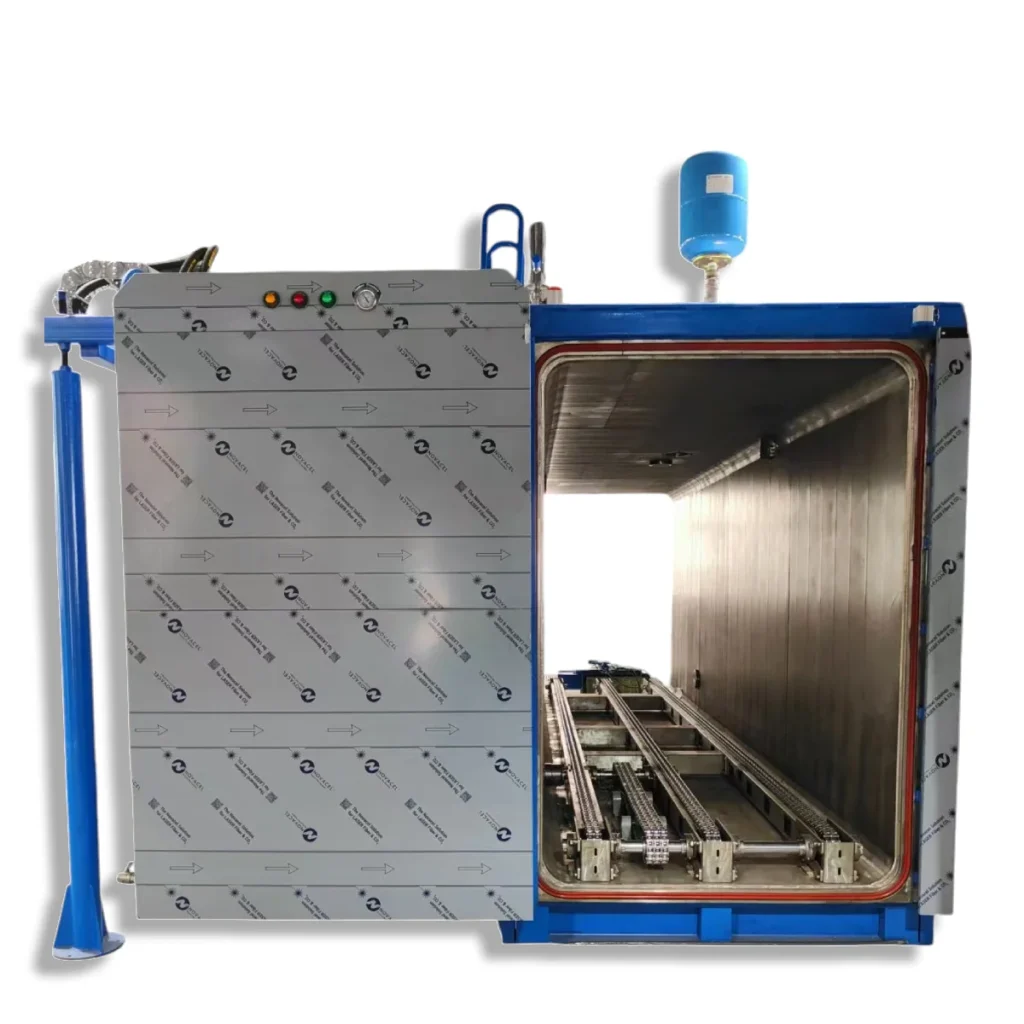
Understanding the interaction between your sterile barrier and the gaseous sterilant is the first step. The second step is utilizing high-precision hardware that can manage gas concentration (200-800 mg/L) and humidity (>30%) with absolute consistency.
View BOCO Industrial ETO Sterilizer SolutionsReferences: Based on SBA Guidance Document – Compatibility of materials used for Sterile Barrier Systems with sterilization processes.