Kif taħdem l-isterilizzazzjoni tal-gass tal-ossidu tal-etilene?
L-effettività tal-isterilizzazzjoni tal-gass tal-ossidu tal-etilene tinsab fil-kapaċità tagħha li tfixkel l-istruttura ċellulari tal-mikro-organiżmi. Hawn tqassim pass pass ta' kif taħdem:
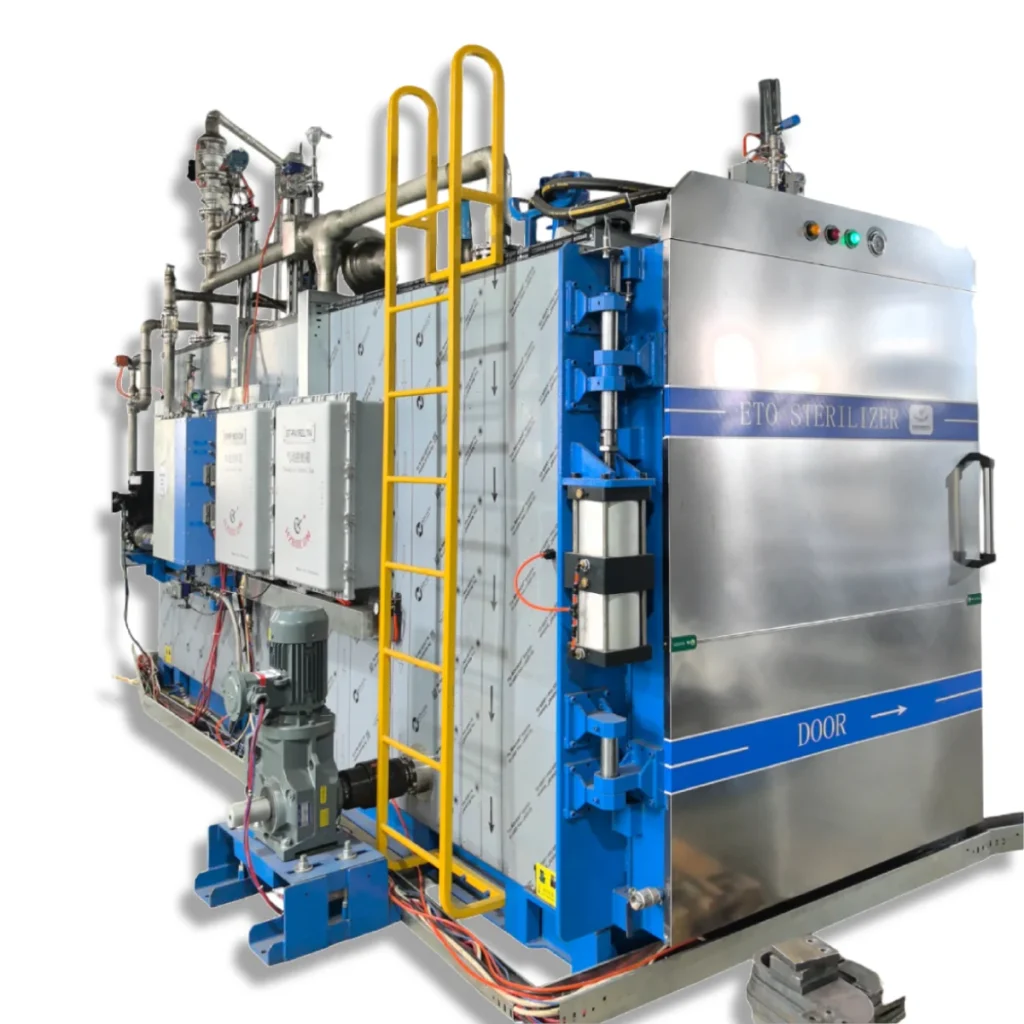
1.Penetrazzjoni ta' Gass EO
Il-gass ta 'l-ossidu ta' l-etilene huwa penetrattiv ħafna, li jfisser li jista 'faċilment jilħaq mikro-organiżmi anke f'żoni diffiċli biex jiġu aċċessati, bħal xquq, pori, u disinji ta' apparat kumpless. Dan jiżgura sterilizzazzjoni bir-reqqa tal-oġġett kollu.
2.Alkilazzjoni: Il-Mekkaniżmu Ewlenin
Il-mod primarju ta 'l-ossidu ta' l-etilene joqtol il-mikro-organiżmi huwa permezz ta 'proċess kimiku msejjaħalkilazzjoni. Il-gass EO jirreaġixxi mad-DNA, l-RNA, u l-proteini taċ-ċelloli tal-mikrobi, u jfixkel il-funzjonijiet ċellulari tagħhom. Speċifikament, dan:
- Jagħmel ħsara lid-DNA: Il-gass EO alkylates l-aċidi nuklejċi fid-DNA, u jipprevjeni lill-mikro-organiżmi milli jirriproduċu.
- Tfixkel il-proteini: Tibdel il-proteini u l-enzimi essenzjali, u tagħmilhom mhux funzjonali.
- Jeqred il-membrani taċ-ċelluli: Il-gass EO jfixkel il-ħitan taċ-ċelluli u l-membrani, li jwassal għall-mewt taċ-ċelluli.
3.Ħsara Irriversibbli
Il-proċess ta 'alkilazzjoni jikkawża ħsara irriversibbli lill-komponenti ċellulari tal-mikro-organiżmi. Ladarba d-DNA, il-proteini u l-membrani tagħhom jiġu kompromessi, il-mikro-organiżmi ma jistgħux jgħixu jew jirreplikaw.
Il-Proċess ta 'Sterilizzazzjoni
Biex tkun żgurata sterilizzazzjoni sħiħa, l-isterilizzazzjoni tal-gass tal-ossidu tal-etilene ssegwi proċess ikkontrollat bir-reqqa:
- Prekondizzjonament: L-oġġetti huma esposti għal temperatura u umdità kkontrollati biex jippreparawhom għall-isterilizzazzjoni.
- Fażi tal-vakwu: L-arja titneħħa mill-kamra tal-isterilizzazzjoni biex toħloq vakwu, li jippermetti li l-gass EO jippenetra fil-fond.
- Espożizzjoni għall-gass: Il-gass EO jiġi introdott fil-kamra f'konċentrazzjoni speċifika u jinżamm għal perjodu stabbilit (tipikament 1-6 sigħat).
- Arjazzjoni: Wara l-isterilizzazzjoni, l-oġġetti jiġu arjati biex jitneħħew kwalunkwe gass EO residwu, u jiġi żgurat li huma sikuri għall-użu.
Għaliex l-Isterilizzazzjoni tal-Gass tal-Ossidu tal-Etilene hija daqshekk effettiva?
- Effikaċja ta' Spettru Wiesgħa: Il-gass EO huwa effettiv kontra kull tip ta 'mikro-organiżmi, inklużi batterji, viruses, fungi, u anke spori reżistenti ħafna.
- Proċess b'Temperatura Baxxa: Jopera f'temperaturi baxxi (30-60 ° C), li jagħmilha ideali għal materjali sensittivi għas-sħana.
- Penetrazzjoni profonda: Il-gass EO jista 'sterilizza materjali kumplessi u porużi li metodi oħra ma jistgħux jilħqu.
- Versatilità: Huwa adattat għal firxa wiesgħa ta 'materjali, inklużi plastiks, gomma, u metalli.
Applikazzjonijiet ta 'Sterilizzazzjoni tal-Gass tal-Ossidu tal-Etilene
L-isterilizzazzjoni tal-gass tal-ossidu tal-etilene tintuża f'diversi industriji, inklużi:
- Apparat Mediku: Strumenti kirurġiċi, kateteri, impjanti, u tagħmir ieħor sensittiv għas-sħana.
- Farmaċewtiċi: Sterilizzazzjoni ta 'drogi u bijoloġiċi li ma jistgħux jifilħu temperaturi għoljin.
- Tagħmir tal-laboratorju: Għodod bħal dixxijiet petri, pipetti, u oġġetti oħra tal-laboratorju.
- Użi Industrijali: Sterilizzazzjoni ta 'materjali tal-ippakkjar, kożmetiċi, u ċerti prodotti tal-ikel.
Konsiderazzjonijiet ta' Sigurtà
Filwaqt li l-isterilizzazzjoni tal-gass tal-ossidu tal-etilene hija effettiva ħafna, teħtieġ miżuri ta 'sikurezza stretti minħabba n-natura tossika u fjammabbli tal-gass EO:
- Ventilazzjoni xierqa: Żgura li ż-żona ta 'sterilizzazzjoni tkun ivventilata tajjeb biex tevita l-akkumulazzjoni tal-gass.
- Tagħmir Protettiv Personali (PPE): L-operaturi għandhom jilbsu ingwanti, maskri, u gogils biex jimminimizzaw l-espożizzjoni.
- Monitoraġġ: Iċċekkja regolarment il-livelli tal-gass EO fuq il-post tax-xogħol biex tiżgura li jibqgħu fil-limiti sikuri.
- Taħriġ: Il-persunal għandu jkun imħarreġ fl-immaniġġjar ta' sterilizzaturi EO u proċeduri ta' emerġenza.
JEKK TIXTIEQ TAF AKTAR dwar l-isterilizzatur tal-bocon eto
Telefon:+8619975258603
Email:hayley@hzbocon.com
Sit Lokali: Kamra 1202, Caitong Zhongxin, Distrett Xiasha, Belt Hangzhou, Provinċja ta 'Zhejiang, Ċina
Websajt:hzbocon.comzjbocon.com