Compatibilidade de Sistemas de Barreira Estéril com Processos de Esterilização
Ao selecionar materiais para sistemas de barreira estéreis para dispositivos médicos, garantir uma Nível de garantia de esterilidade (SAL) de $10^{-6}$ é fundamental. Esta probabilidade indica que há menos ou igual a uma chance em um milhão de um item permanecer contaminado após a esterilização terminal.
Fatores críticos de seleção de materiais
De acordo com as orientações da SBA, dez aspectos essenciais devem ser avaliados para manter a barreira microbiana durante todo o ciclo de vida do dispositivo:
- Propriedades de barreira microbiana
- Porosidade & Características físicas/químicas
- Barreiras contra umidade, gás e luz
- Compatibilidade com o dispositivo
- Biocompatibilidade & Toxicologia
- Impressão & Sistemas de rotulagem
- Armazenar & Condições de transporte
- Métodos de embalagem (selado, dobrado, colado)
- Ambiental & Aspectos de reciclagem
Análise de Técnicas de Esterilização
| Método | Mecanismo | Limitações |
|---|---|---|
| Calor (vapor/seco) | Desnaturação/oxidação de proteínas | Agressivo; máx. 127°C para muitos não-tecidos |
| Radiação (gama/feixe eletrônico) | Danos ionizantes no DNA | Pode causar fragilização ou descoloração do polímero |
| Oxidativo (VHP/Plasma) | Oxidação de superfície | Má penetração; incompatível com celulose/papel |
| Óxido de Etileno (ETO) | Alquilação de proteínas | Altamente eficaz para cargas complexas e porosas |
Por que o óxido de etileno (ETO) é o padrão da indústria
O Óxido de Etileno (EO/ETO) é o agente químico preferido para objetos sensíveis a temperaturas superiores a 60°C ou altos níveis de umidade. As principais vantagens incluem:
- Processamento em baixa temperatura: Normalmente realizado entre 30°C e 60°C, preservando a integridade de plásticos delicados e componentes eletrônicos.
- Penetração Superior: O gás ETO é excelente na penetração de materiais porosos, como papel de uso médico e materiais não tecidos de poliolefina (por exemplo, Tyvek).
- Segurança de Materiais: Ao contrário da radiação, o ETO não causa cisão da cadeia polimérica ou “envelhecimento” do material de embalagem durante o ciclo.
- Eficácia comprovada: Mata efetivamente microorganismos e esporos, interferindo no metabolismo normal e nos processos reprodutivos (alquilação).
Observação: Para uma esterilização ETO eficaz, o uso de materiais de barreira porosos é essencial para permitir a troca gasosa e a aeração pós-ciclo.
Otimizando seu fluxo de trabalho de esterilização ETO
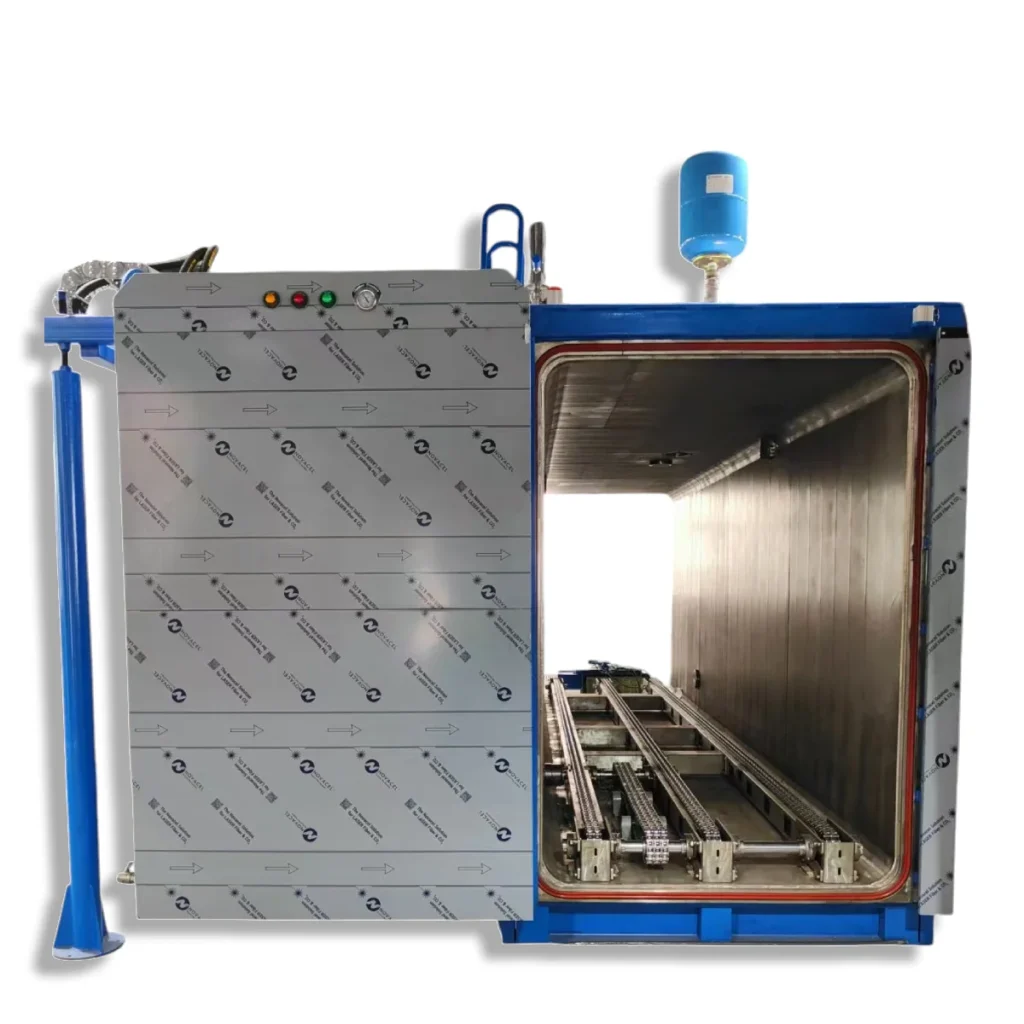
Compreender a interação entre a sua barreira estéril e o esterilizante gasoso é o primeiro passo. A segunda etapa é utilizar hardware de alta precisão que pode gerenciar a concentração de gás (200-800 mg/L) e a umidade (>30%) com consistência absoluta.
Veja as soluções de esterilizador industrial ETO da BOCOReferências: Baseado no Documento de Orientação da SBA – Compatibilidade dos materiais utilizados nos Sistemas de Barreira Estéril com processos de esterilização.