תאימות עיקור של מערכות מחסום סטריליות
ספר לבן טכני
1. הקדמה
התאימות בין מערכות מחסום סטריליות (SBS) ותהליכי עיקור מהווה שיקול הנדסי קריטי בתכנון אריזות מכשור רפואי. שילובים לא הולמים של חומר-תהליך עלולים להוביל לחוסר מספיק של חומר סטרינט חדירה, פירוק חומר או אובדן שלמות המחסום המיקרוביאלי.
נייר טכני זה מתמקד בעקרונות תאימות חומרים עבור טכנולוגיות עיקור נפוץ, עם דגש מיוחד על אתילן אוקסיד (EtO) ותהליכי עיקור בטמפרטורה נמוכה המשמשים מכשירים רפואיים מורכבים ורגישים לחום.
2. דרישות מערכת מחסום סטרילית
- חדירות לחומר העיקור הנבחר
- Resistance to thermal, physical, and chemical stresses
- Post-sterilization microbial barrier integrity
- Stability during storage, transport, and handling
3. Sterilization Processes and SAL Considerations
Sterilization processes are validated to achieve a defined Sterility Assurance Level (SAL), typically 10-6 for medical devices. Achieving this level of assurance requires alignment between device design, packaging materials, and sterilization system capability.
4. Overview of Applicable Sterilization Technologies
4.1 Ethylene Oxide (EtO) Sterilization
Ethylene oxide sterilization is widely applied for devices sensitive to heat and moisture. Typical EtO processes operate at 30–60 °C under controlled humidity conditions, enabling effective sterilization of complex geometries and porous packaging systems.
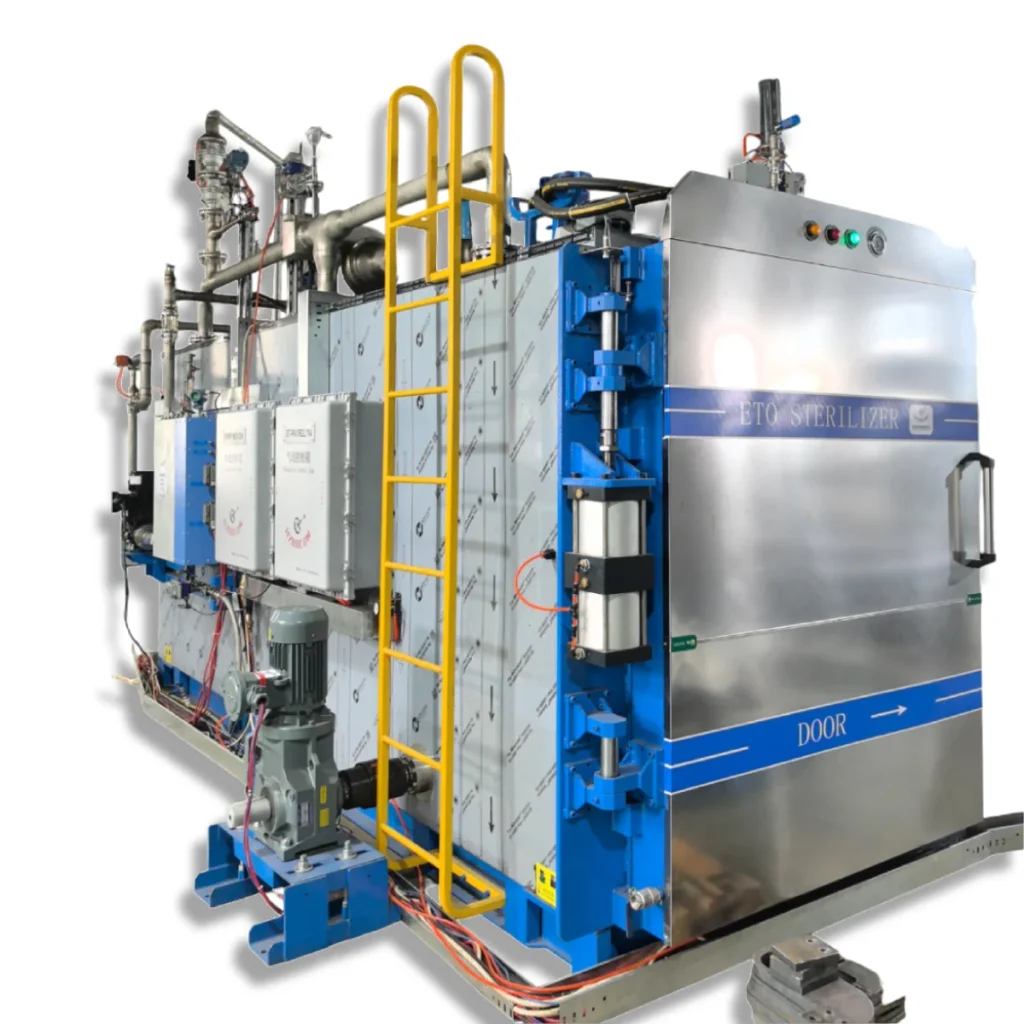
From an engineering perspective, industrial ethylene oxide sterilization systems are designed as integrated solutions combining sterilization chambers, gas circulation, humidity control, and emission management.
4.2 Low-Temperature Oxidative Sterilization
מערכות פלזמה של מי חמצן (VHP) וגז מי חמצן לספק זמני מחזור מהירים וטמפרטורות עבודה נמוכות. עם זאת, תכונות החמצון החזקות שלהם מטילות מגבלות מחמירות יותר על חומרי אריזה תואמים בהשוואה לעיקור EtO.
5. ניתוח תאימות חומרים
5.1 חומרים נקבוביים לעיקור גז
נייר בדרגה רפואית וחומרים לא ארוגים פוליאולפין משמשים בדרך כלל במערכות מחסום סטריליות לעיקור EtO בשל השליטה שלהם נקבוביות ויכולת לשמור על ביצועי מחסום חיידקים לאחר עיקור.
5.2 סרטים ומבנים מרוכבים
Impermeable films and laminated composite materials are widely used in pouches, reels, and blister packaging. Compatibility depends on polymer composition, laminate structure, and resistance to sterilization-induced thermal and chemical stress.
6. Engineering Implications for Sterilization System Design
Packaging material compatibility must be evaluated together with sterilizer performance, including gas distribution uniformity, load configuration, and post-sterilization aeration efficiency.
This is particularly important for large-scale production using industrial EtO sterilization equipment , where process robustness and residue control are critical.
7. Engineering Capability Statement
Engineering teams delivering EtO sterilization systems must integrate packaging compatibility considerations into system design, validation strategy, and environmental control.
Download
Download the BOCON Ethylene Oxide Sterilizer Product Catalog (PDF)
| Comparison Aspect | אתילן אוקסיד (EtO) | VHP / H?O? Plasma | Engineering Implications |
|---|---|---|---|
| Operating Temperature | 30–60 °C | < 60 °C | Both suitable for heat-sensitive devices |
| Packaging Material Range | Broad | Limited | EtO compatible with most porous materials |
| Compatibility with Cellulose | Suitable | Not Suitable | Cellulose reacts with hydrogen peroxide |
| Penetration Capability | High | Limited | EtO penetrates complex loads more effectively |
| Cycle Time | Long | Short | EtO requires aeration; VHP optimized for speed |
| Residual Risk | Requires control | Minimal | EtO needs validated aeration |
| Load Complexity | High tolerance | Limited | VHP penetration constraints |
| Material Degradation Risk | Low | לְמַתֵן | Oxidative stress affects polymers |
| Typical Applications | Complex medical devices | Simple, low-mass devices | Process selection driven by design constraints |
| Packaging Design Flexibility | High | Restricted | EtO allows wider material selection |
This comparison highlights that sterilization method selection must consider packaging material compatibility, load complexity, and residual management requirements in addition to cycle time.