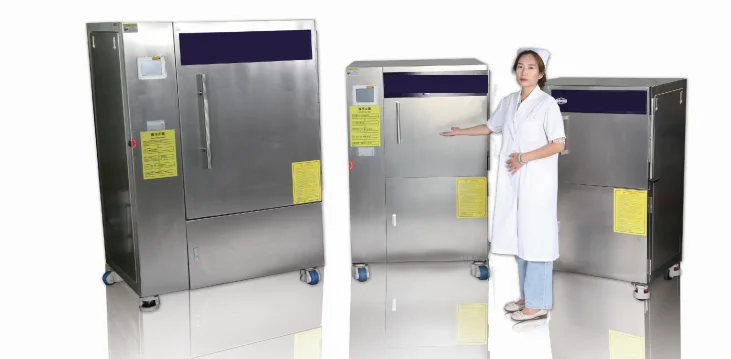
ETO-Sterilisationstechnologien im Vergleich zu anderen: Vor- und Nachteile
Die Sterilisation ist ein entscheidender Prozess bei der Infektionskontrolle und stellt sicher, dass medizinische Instrumente und Geräte frei von lebensfähigen Mikroorganismen sind. Für medizinisches Fachpersonal ist es wichtig, die verschiedenen verfügbaren Methoden sowie ihre jeweiligen Vor- und Nachteile zu verstehen, um fundierte Entscheidungen treffen zu können.
1. Dampfsterilisation (Autoklavieren)
Vorteile:
- Wirksamkeit: Hochwirksam gegen alle Arten von Mikroorganismen, einschließlich Sporen.
- Geschwindigkeit: Kurze Zykluszeiten führen zu einer schnellen Bearbeitung der Instrumente.
- Umweltfreundlich: Nutzt Wasser und Wärme, ohne dass schädliche Rückstände zurückbleiben.
- Kostengünstig: Im Allgemeinen niedrigere Betriebskosten als andere Methoden.
Nachteile:
- Begrenzte Verwendung für hitzeempfindliche Gegenstände: Nicht geeignet für bestimmte Materialien, die hohen Temperaturen nicht standhalten.
- Beschädigungsgefahr: Bei unsachgemäßer Überwachung können einige empfindliche Instrumente beschädigt werden.
- Feuchtigkeitsprobleme: Die Instrumente können nass werden, was zu Rost oder Korrosion führen kann.
2. Sterilisationstechnologien mit Ethylenoxid (ETO).
Vorteile:
- Vielseitigkeit: Geeignet für hitze- und feuchtigkeitsempfindliche Gegenstände, auch komplexe Geräte.
- Hervorragende Penetration: Dringt effektiv in Verpackungsmaterialien und Gerätelumen ein und gewährleistet eine gründliche Sterilisation.
- Minimales Schadensrisiko: Verursacht im Vergleich zur Dampfsterilisation weniger wahrscheinlich thermische Schäden.
Nachteile:
- Lange Zykluszeiten: Erfordert längere Verarbeitungs- und Belüftungszeiten.
- Toxizität: ETO ist giftig und potenziell krebserregend, was eine sorgfältige Handhabung und Überwachung erfordert
3. Wasserstoffperoxid-Gasplasma
Vorteile:
- Niedrige Temperatur: Wirksam für wärmeempfindliche Instrumente, die bei niedrigeren Temperaturen betrieben werden.
- Schnelle Zykluszeiten: Typischerweise kürzere Sterilisationszyklen im Vergleich zu ETO.
- Keine giftigen Rückstände: Hinterlässt nach der Sterilisation keine schädlichen Rückstände und ist daher umweltfreundlich.
Nachteile:
- Materialbeschränkungen: Bestimmte Materialien wie Zellulose und Flüssigkeiten können nicht verarbeitet werden.
- Gerätekompatibilität: Einige komplexe Instrumente mit engen Lumen sind möglicherweise nicht mit dieser Methode kompatibel.
- Erfordert eine spezielle Verpackung: Für eine wirksame Sterilisation ist die Verwendung synthetischer Materialien erforderlich.
4. Chemische Sterilisation (z. B. Peressigsäure)
Vorteile:
- Schnelle Bearbeitung: Schnelle Zykluszeiten, typischerweise innerhalb von 30–45 Minuten.
- Wirksam gegen ein breites Spektrum an Mikroorganismen: Gute Wirksamkeit gegen verschiedene Krankheitserreger, einschließlich Sporen.
- Vorteile für die Umwelt: Produziert umweltfreundliche Nebenprodukte.
Nachteile:
- Materialkompatibilität: Möglicherweise nicht für alle Instrumentenmaterialien geeignet, insbesondere für empfindliche Oberflächen.
- Begrenzte Nutzung: Hauptsächlich nur für eintauchbare Instrumente wirksam.
- Sicherheitsrisiken: Aufgrund möglicher Haut- und Augenreizungen ist Vorsicht geboten.
WENN SIE MEHR ÜBER DIE Ethylenoxid-Sterilisation ERFAHREN WOLLEN
Telefon:+8619975258603
E-Mail:hayley@hzbocon.com
Lokaler Standort: Raum 1202, Caitong Zhongxin, Bezirk Xiasha, Stadt Hangzhou, Provinz Zhejiang, China
Webseite:hzbocon.comzjbocon.com